Your blower is running, the vents are open, and yet the air arriving feels like it skipped the furnace entirely. In Leesburg, that pattern shows up in Ashburn subdivisions and older Waterford farmhouses alike, and the timing of the chill points toward its source.
Cold air from the vents usually means air is moving without enough heat behind it. Look first at the fan setting, then at whether the burners stay lit through a full cycle. A sensor coated with residue, an igniter that no longer glows, or heat escaping through attic ducts can each produce that same chilly result. Try the safe checks below, watch one complete cycle, and if the air still arrives cold, call Loudoun Furnace Pros at (571) 561-3454.
The fan setting explains more cold air calls than any broken part. When the thermostat fan sits on the on position, the blower keeps circulating air between heating cycles, long after the burners have shut down. That air passes through ductwork cooled by a January night in the Blue Ridge foothills, and it lands on your skin feeling colder than the room itself. Switch the setting to auto and the blower rests between cycles. If warmth returns with the next cycle, the furnace was healthy all along and only the setting was wrong. That simple test also protects the rest of the system from unnecessary wear during repeated test cycles.
Inside the cabinet, two ignition parts shape the next group of causes. A flame sensor coated with pale residue can let the burners light, lose the flame signal within seconds, and close the gas supply as a precaution, leaving the blower to finish its run with unheated air. A worn igniter creates a quieter version: it never gets hot enough to light the burners at all. A third cause works in reverse. Restricted airflow can overheat the cabinet until the limit switch cuts the burners while the blower keeps running to cool things down, so the vents turn cold mid cycle. Either fault can come and go early on, which is why the pattern may change from morning to evening.
The final group has nothing wrong at the furnace itself. Supply ducts crossing an unheated attic, a crawl space, or a garage ceiling in an older home near old town Leesburg can surrender heat along every foot of a long run, especially where a joint has loosened or insulation has thinned. Propane furnaces serving homes in western Loudoun follow the same delivery path, so a burner that performs well at the cabinet can still deliver disappointing air to a distant bedroom. Comparing temperatures at the nearest and farthest vents separates this delivery loss from a heating fault.
These four observations take only a few minutes, involve no tools, and tell a technician a surprising amount about where the warmth went missing.
Keep these checks outside the cabinet at all times. If you smell gas, leave the house and call the gas provider or 911 from outside. Never open the burner compartment, never touch gas lines, valves, or the heat exchanger yourself, and stop checking and call for help if a carbon monoxide alarm sounds at any point.
Cold air stops being a comfort problem when it is the only air the furnace can produce during a hard January cold snap. Loudoun homes lose indoor heat quickly once Blue Ridge foothill cold settles in after dark, and pipes along outside walls in older Leesburg houses can approach freezing before morning. If no vent warms at all, space heat is unavailable, and the forecast keeps falling, treat the call as urgent and phone for emergency help right away.
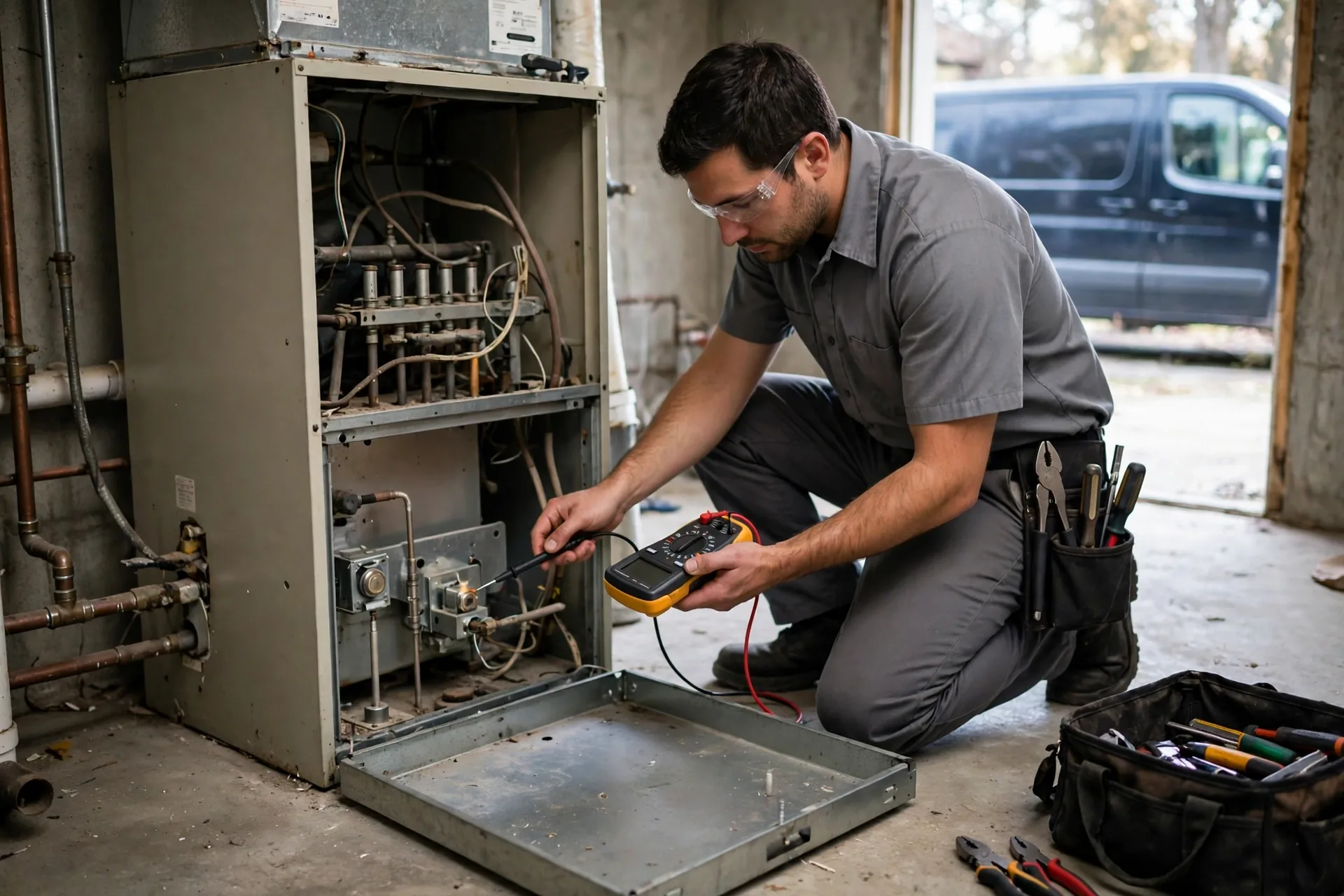
A diagnosis here follows one heating cycle from start to finish with instruments attached at each stage. The technician confirms the thermostat call, watches the inducer start, times how long the burners stay lit, and reads the flame sensor signal in microamps while the flame is present. Temperature readings at the furnace outlet and at selected vents show whether heat is missing at the source or fading along the way. That sequence separates a sensor fault, an igniter fault, and a delivery loss without swapping parts on a guess. Readings are compared with the furnace rating information, so judgments rest on numbers for this specific unit rather than general expectations for any furnace.
Repairs then follow the stage that failed. Burner, sensor, and igniter work is handled through our Gas Furnace Repair service, airflow restrictions are corrected at the filter path and blower, and leaking or poorly insulated runs are sealed so heat survives the trip to far rooms. Every finding is explained in writing before work starts, so you can approve the repair knowing exactly which stage failed and what will change. If a part needs ordering, you will know the reason, the expected timing, and how to run the system safely, or keep it off, in the meantime.
Proof comes from a second full cycle after the repair. Supply temperatures are measured again at the same vents used at the start, the burners are watched through a complete run, and the limit controls are confirmed to stay quiet. You will hear which cause explained your pattern, what condition the related parts were in, and which simple habits, mainly filter care and the auto fan setting, protect the result through the rest of winter. The written summary leaves you with a record you can refer back to next season.
These answers cover the cold air patterns Leesburg callers describe most often.
Describe what your furnace is doing and we will point you to the right next step.
Call (571) 561-3454Warm supply air travels farther to reach upstairs rooms, and long runs through an attic or wall cavity lose heat on the way. A partly closed damper, a loosened joint, or weak airflow makes that loss larger upstairs. If downstairs vents feel properly warm during the same cycle, the furnace is probably heating well and the delivery path upstairs deserves the first look.
Lukewarm air through a long, steady cycle often means only part of the heating capacity is working, or heat is bleeding away before it reaches the rooms. A burner running below its proper output, a limit control trimming run time, or duct losses can all fit. The pattern matters less than the measurements, which show where the temperature drop begins.
Yes, in homes where return air depends on an open path back to a central return. A closed bedroom door can trap supply air in the room, raise its pressure, and reduce how much warm air the vent delivers. Try a cycle with bedroom doors open. If the room warms noticeably, airflow balance rather than the furnace explains the chill.
Ducts sitting idle between cycles cool toward attic or crawl space temperatures, and the first air the blower pushes is the cool air already resting inside those runs. Within a minute or two, air heated by the exchanger should replace it. A brief cool start is ordinary. Air that remains cold well into the cycle is the pattern worth reporting.
Running it is generally reasonable when the rest of the house heats normally, there are no unusual smells or sounds, and the cold room can stay closed off for a night. One isolated room usually signals a duct, damper, or airflow issue rather than a furnace in distress. Book a visit, mention which room it is, and note when the pattern began.
Short runs that end before the exchanger warms can feel exactly like cold air.
When moving cold air gives way to complete silence, the startup chain is next.
Burner, igniter, and flame sensing faults tested in sequence and repaired.
No warm air at all on a freezing Loudoun night gets priority, day or night.
Tell us when the air turns cold during the cycle. That timing starts the diagnosis before we arrive.
Call (571) 561-3454