A furnace that fires, runs a few minutes, and shuts down again never really heats a Loudoun County home. Rooms near the Blue Ridge foothills cool between restarts, parts wear from constant starting, and the thermostat call stays open far longer than it should.
Short cycling usually points to restricted airflow, a flame sensor that cannot prove the burner is lit, an overheating limit switch, an oversized unit, or a thermostat reading the wrong spot. Watch one full cycle and note how many minutes the burners stay on before the blower stops. That timing narrows the search considerably. If the house keeps losing ground on a cold night, call Loudoun Furnace Pros at (571) 561-3454 for a proper cycle test.
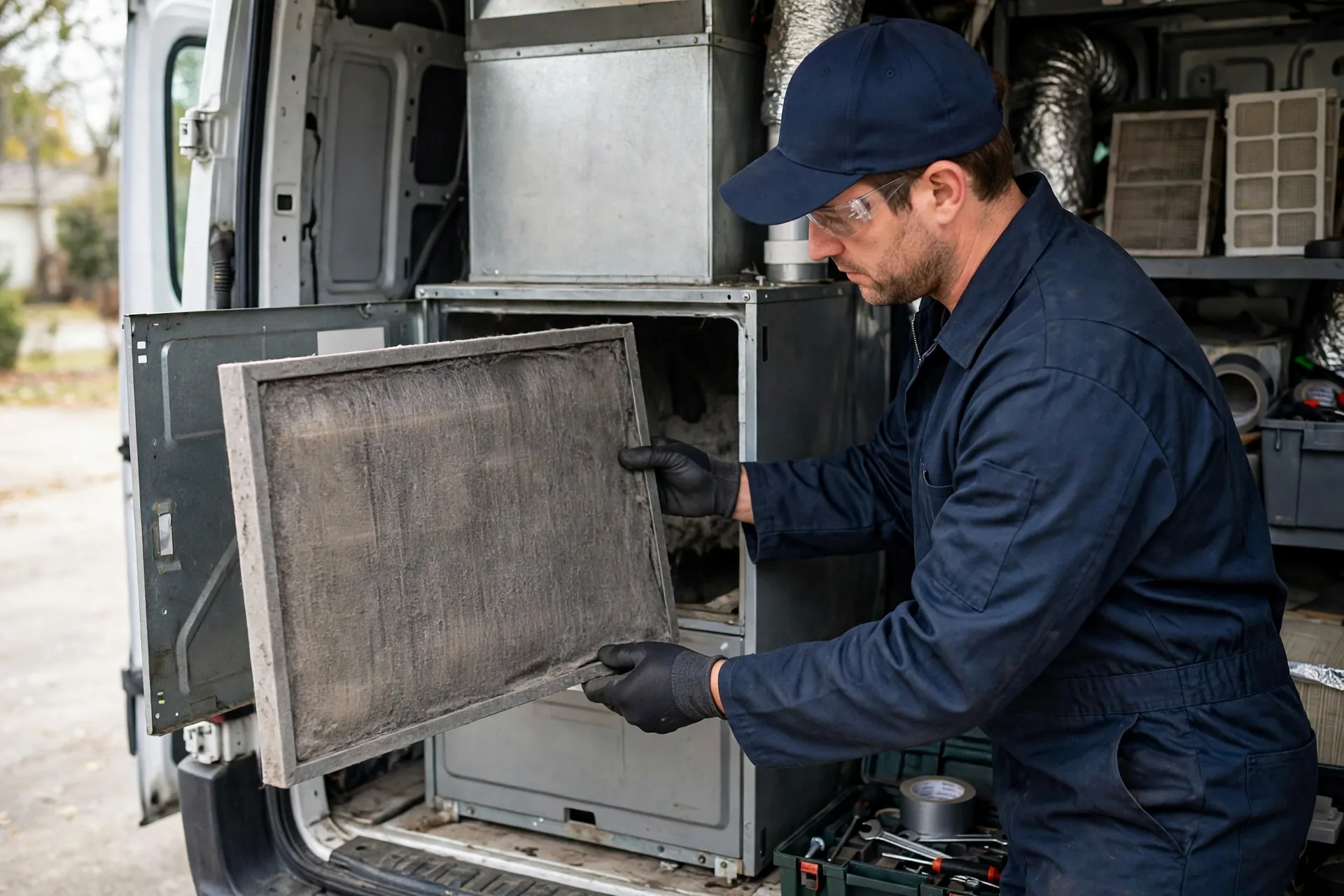
Airflow trouble sits at the top of the list in Leesburg homes. A filter loaded with dust starves the heat exchanger of moving air, temperatures inside the cabinet climb fast, and the furnace protects itself by cutting the burners early. Historic houses near downtown often have smaller return paths than modern equipment expects, and closed vents or blocked returns in a few rooms make the restriction worse. Propane furnaces in western Loudoun behave the same way when air cannot move, because the safety controls respond to heat buildup, not fuel type. Freeze and thaw weather also works older duct joints loose over time, opening small gaps that waste air before it reaches the rooms farthest from the furnace.
A dirty flame sensor creates a different kind of short run. The sensor sits in the burner flame and confirms that ignition actually happened. When its surface coats with oxidation, it stops sending a steady signal, and the control board shuts the gas down within seconds as a precaution. The furnace tries again, lights again, and quits again, sometimes repeating the loop for an hour. A related pattern comes from the high limit switch, which opens the circuit when the cabinet overheats and resets once things cool, producing longer but still abbreviated cycles.
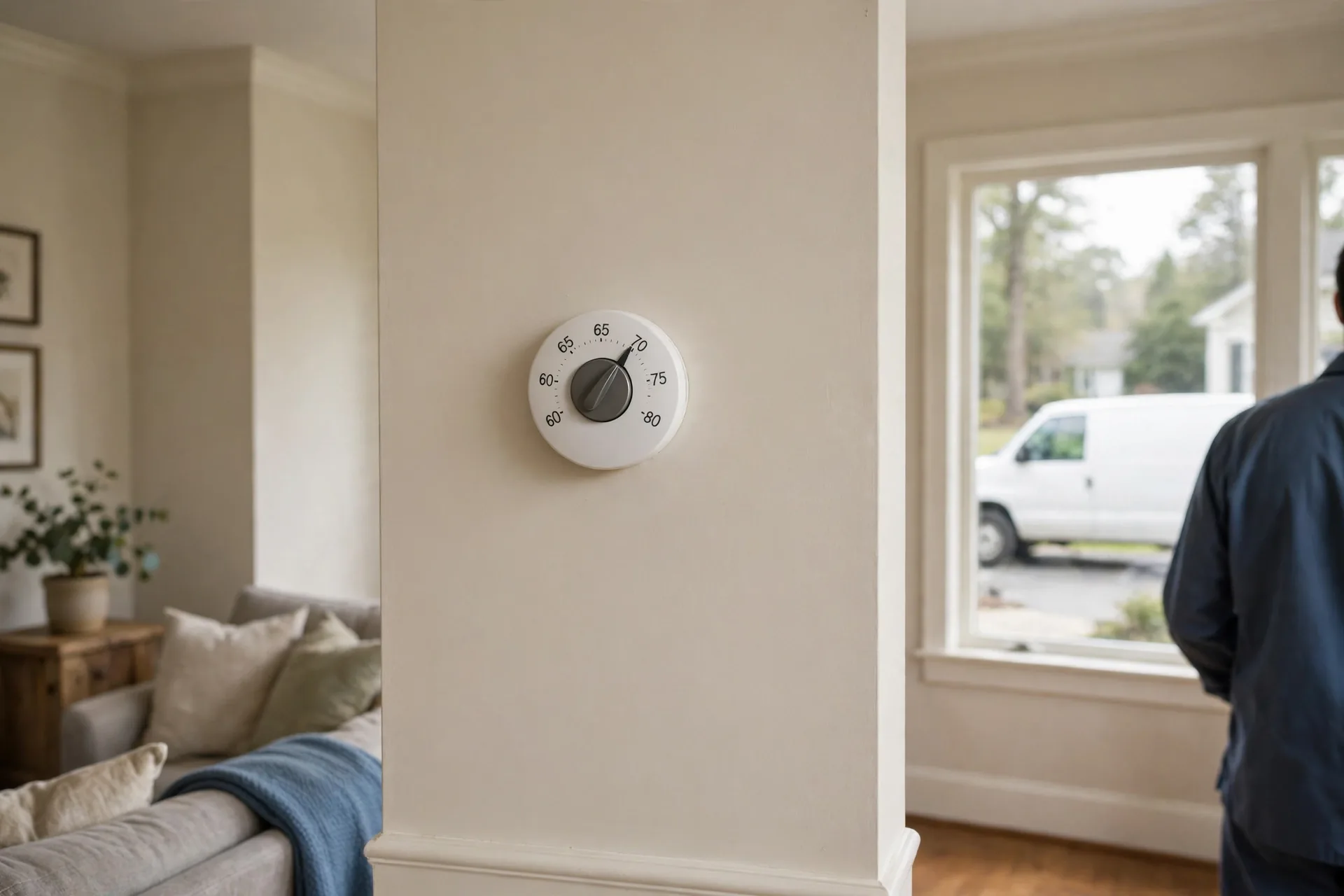
Sizing and thermostat placement finish the picture. A furnace that is too large for the house satisfies the thermostat before the run has really settled, which is common when older equipment in Ashburn or Sterling was replaced by capacity rather than by calculation. The rooms warm unevenly, the unit rests briefly, then fires again. A thermostat mounted above a supply vent, beside a sunny window, or in a drafty hallway misreads the house entirely, calling for short bursts of heat that never match what bedrooms actually feel like. In two story colonials common around Leesburg, an upstairs zone damper or sensor drifting out of calibration can drive the same restless pattern.
You can gather genuinely useful clues without tools and without opening anything. Work through these four observations and write down what you notice, because the pattern you describe often points the technician toward the right test first.
Keep firm boundaries around anything beyond observation. If you smell gas, leave the house right away and call the gas provider or 911 from outside. A strong electrical burning smell means switch the system off at the breaker and leave it off. Never open the burner compartment or touch gas lines, valves, or the heat exchanger yourself, because those parts belong to a trained technician with testing instruments.
Rapid cycling becomes urgent when each restart delivers less heat than the one before and indoor temperatures slide during a Loudoun cold snap. A furnace that eventually locks out after repeated failed cycles can leave a house without heat overnight, when pipes in exterior walls face freezing risk. Babies, older relatives, and anyone medically fragile change the calculation further. Treat temperature loss, lockouts, or a system that will not complete a cycle as a reason to call immediately.
Diagnosis starts by watching, not guessing. The technician sets the thermostat to call for heat and times a complete cycle, noting when the inducer starts, when the burners light, how the flame looks, and the exact moment everything stops. That observed sequence separates an ignition problem from an airflow problem from a control problem before a single part comes off. Filter condition, blower operation, and vent temperatures all get recorded while the system runs under its normal load. The technician also notes the weather, the filter age, and which rooms feel coldest, because that context helps judge whether the short run is a new failure or a pattern the house has lived with since installation.
Testing then follows the sequence step by step. The flame sensor signal is measured while the burners run, cabinet temperatures are compared against the limit switch rating, and static pressure readings show whether the duct system is choking airflow. Thermostat behavior gets verified at the wall and at the control board. This is the same methodical approach behind our Furnace Maintenance visits, where sensors, airflow, and safety controls are checked in order rather than at random.
Once a measurement breaks from its expected range, the cause is usually clear: a sensor reading low, a limit opening early, pressure numbers that explain the overheating, or a run time so short that sizing itself is the finding. Every finding is explained in writing before work starts, including what the repair addresses and what it will not change. If the honest answer involves capacity or duct changes rather than a part, that conversation happens plainly, with the cycle timing to back it up. You keep the written record afterward, so the timing, pressures, and readings from the visit stay available if the pattern ever returns or a future replacement decision needs evidence rather than memory.
These are the follow up questions Leesburg homeowners tend to ask once they start timing their own furnace.
Describe what your furnace is doing and we will point you to the right next step.
Call (571) 561-3454The thermostat is probably still calling for heat because the house never reached the set point, or the control board is retrying after a safety shutdown. Short runs deliver little warmth, so the call stays open and the system tries again. Timing a full cycle helps separate a control retry from a thermostat that simply has not been satisfied yet.
Yes, closing several registers raises pressure inside the duct system and slows the air moving across the heat exchanger. The cabinet then heats faster than it should, and the limit switch can end the cycle early. Opening vents in unused rooms and keeping returns clear is a simple step, although it will not correct a dirty sensor or an oversized unit.
Learning features adjust when heat is requested, but they cannot repair the condition that ends each run early. If a limit switch, flame sensor, or airflow restriction is cutting cycles short, the thermostat will keep recording the same behavior. Fix the mechanical or sensing cause first, then let the thermostat fine tune comfort once full cycles are back.
Circulating air between cycles can even out room temperatures slightly, and it sometimes helps a house where one level lags behind. It does not change burner run time, sensor signals, or cabinet temperatures, so the underlying cycling continues. Treat fan circulation as a comfort experiment, not a repair, and arrange a diagnosis if the short runs persist.
Not on suspicion alone. A proper load calculation considers insulation, windows, duct capacity, and how the house actually loses heat on a design winter day in Loudoun County. If the calculation confirms oversizing, a smaller unit at replacement time usually delivers longer, steadier cycles. Until then, airflow improvements and control adjustments can soften the pattern.
When the blower runs but the air at the registers never warms up properly.
Clicks, rattles, and hums that often show up alongside uneven heating cycles.
Seasonal cleaning and testing that keeps sensors and airflow from drifting out of range.
Around the clock help when repeated cycling turns into no heat at all.
Steady cycles warm a house better than frantic ones. Call, share your cycle timing, and let the testing begin from there.
Call (571) 561-3454