
Small Town, Full Service
Hamilton's size does not change what its furnaces need. The same igniters fail, the same heat exchangers age, the same January cold snaps hit. What changes is response: as a smaller community off the main corridors, Hamilton deserves a service that actually shows up, and we do.
Oil Conversions and Their Leftovers
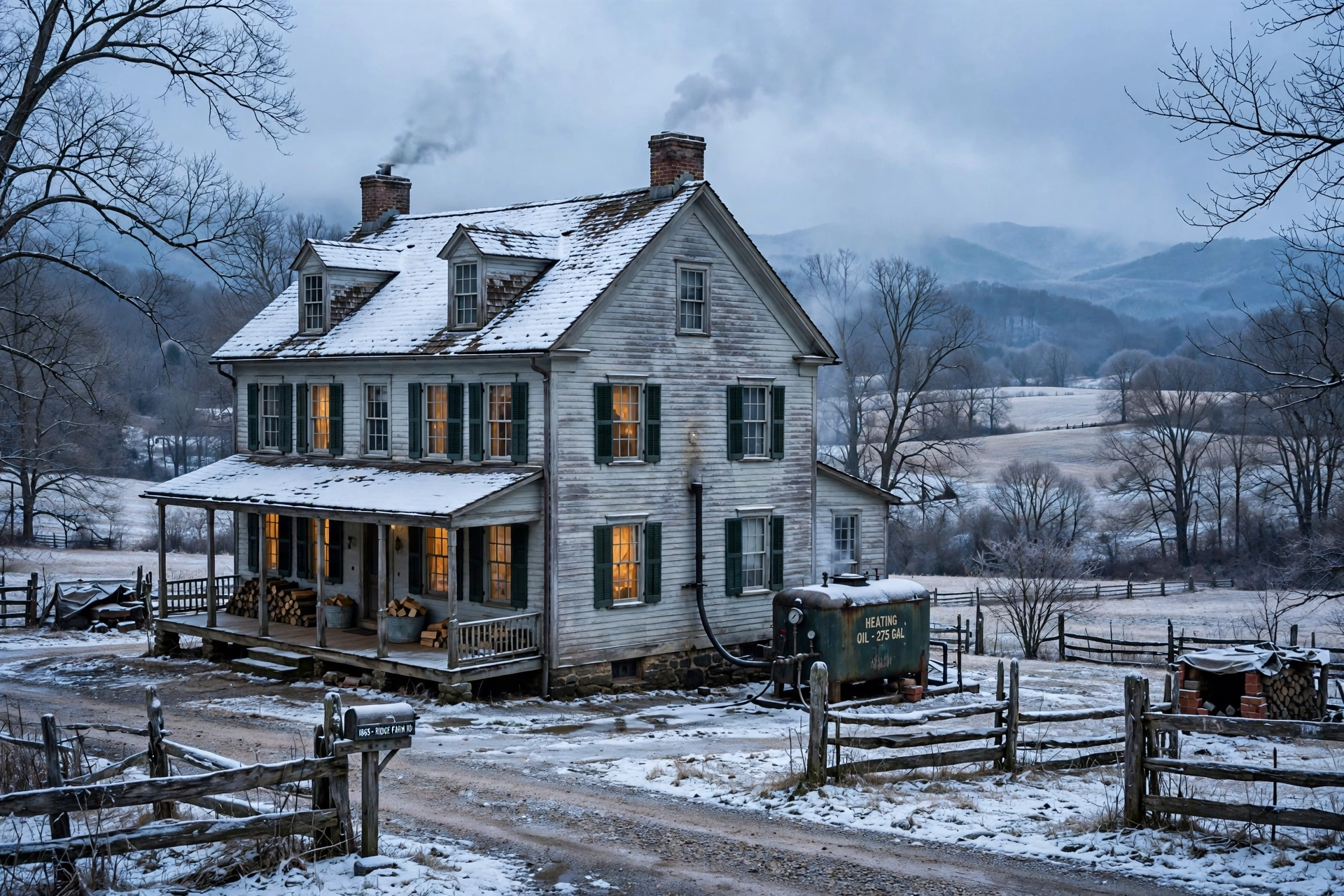
Some Hamilton homes converted from oil to gas or propane over the years, and conversions leave traces: oversized chimneys, repurposed venting, fuel lines with history. We check conversion-era work carefully, because shortcuts from decades ago become today's problems.
Rural Routes and Winter Access
Properties on Hamilton's rural routes can be harder to reach in winter weather. When you call during a storm, tell us about your road and driveway conditions. We plan accordingly and keep you updated on arrival.
Small Town, Real Winter
Hamilton's winters are the real thing. Located in western Loudoun County away from the moderating influence of the suburban heat island, Hamilton runs colder than Leesburg on still, clear nights when cold air settles into the low ground. The town's rural surroundings mean less windbreak from development and more exposure when winter storms sweep through.
For Hamilton's furnaces, that means honest winter workload. There is no coasting through January here. Systems log serious heating hours, and the equipment shows it: igniters wear faster, motors accumulate hours, and any deferred maintenance from fall becomes a January emergency. The smaller the town, the more it matters that the furnace simply works, because alternative help is further away.
Ice storms deserve special mention. Western Loudoun catches freezing rain more often than the eastern suburbs, and ice brings power outages. A furnace cannot run without electricity, no matter the fuel. Hamilton homeowners in outage-prone spots should know where their electrical panel is, keep flashlights accessible, and never attempt to power a furnace with an improper generator connection.
Hamilton's Quiet Landmarks
Hamilton is a town of about 600 people centered on a compact downtown along Main Street. The Hamilton Historic District preserves the 19th-century commercial core, with buildings that have served the community for over a century. It is the kind of place where the post office, the market, and the church anchor daily life.
Surrounding the town, Loudoun County's agricultural heritage is on full display: working farms, horse properties, and the open fields that stretch toward Purcellville to the west and Waterford to the north. The South Fork of Catoctin Creek winds through the area. This is farm country that happens to have a town in it, not the other way around.
What this means for heating service: Hamilton addresses range from in-town homes on small lots to farm properties down long driveways. We serve both with the same standard, but rural calls benefit from a heads-up about road conditions in winter weather. Tell us what the driveway looks like when you call during a storm.
What Hamilton Homes Are Made Of
Hamilton's housing stock reflects its history as a railroad and farming town. In-town homes include late-19th and early-20th-century houses, many updated over the decades with varying degrees of care. These homes heat with whatever system fit at the time of each renovation: some have modern gas furnaces, others run propane, and a few still show traces of old oil systems in their basements.
Outside town, the picture diversifies further. Farmhouses from the 1800s sit alongside mid-century ranch homes and the occasional new construction on subdivided farmland. Each brings different heating challenges: the farmhouse with its additions and evolving ductwork, the ranch with its original furnace approaching end of life, the new build with builder-grade equipment already showing early wear.
Oil-to-gas and oil-to-propane conversions are common in Hamilton's older homes. These conversions sometimes left behind oversized chimneys, repurposed venting, or fuel lines with decades of history. When we service a converted home, we inspect the conversion-era work carefully, because shortcuts taken during the oil era become today's safety concerns.
Oil Conversions and Other Hamilton Heating Quirks
The most Hamilton-specific heating issue is the legacy oil conversion. When homes switched from oil to gas or propane, usually in the 1980s through 2000s, the work quality varied enormously. Some conversions were done meticulously with proper vent resizing and combustion air provisions. Others were, frankly, slapped together. We find abandoned oil lines still connected, chimneys far too large for the new equipment, and venting that does not meet any standard you could name.
An oversized chimney is more than an aesthetic issue. Modern furnaces, especially mid and high-efficiency units, need properly sized venting to draft correctly. A chimney built for an old oil burner can cause condensation problems, draft failures, and in the worst case, carbon monoxide spillage. If your Hamilton home was converted from oil and the venting was never updated, that deserves a professional look.
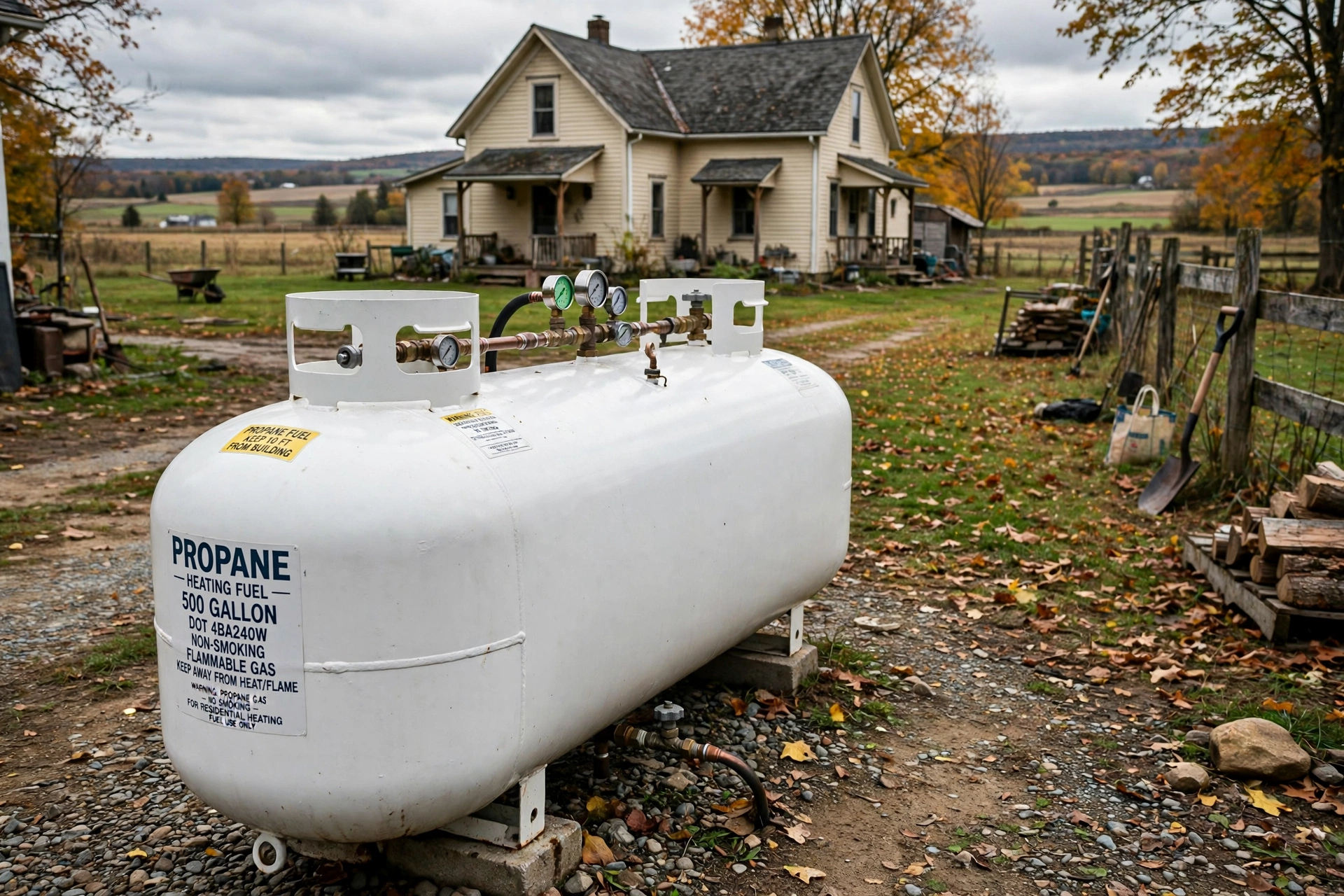
Rural propane setups bring their own quirks: long gas lines from tank to house that lose pressure over distance, regulators exposed to weather, and tanks placed for delivery-truck convenience rather than system efficiency. Each of these is fixable, but only if someone looks.
Preparing a Rural Hamilton Property for Winter
Start with the furnace itself: schedule fall service before the heating season. For propane homes, check the tank gauge and schedule a delivery while the weather is still mild. Verify the tank is accessible: overgrown vegetation, muddy ground, or a locked gate can delay a delivery when you need it most.
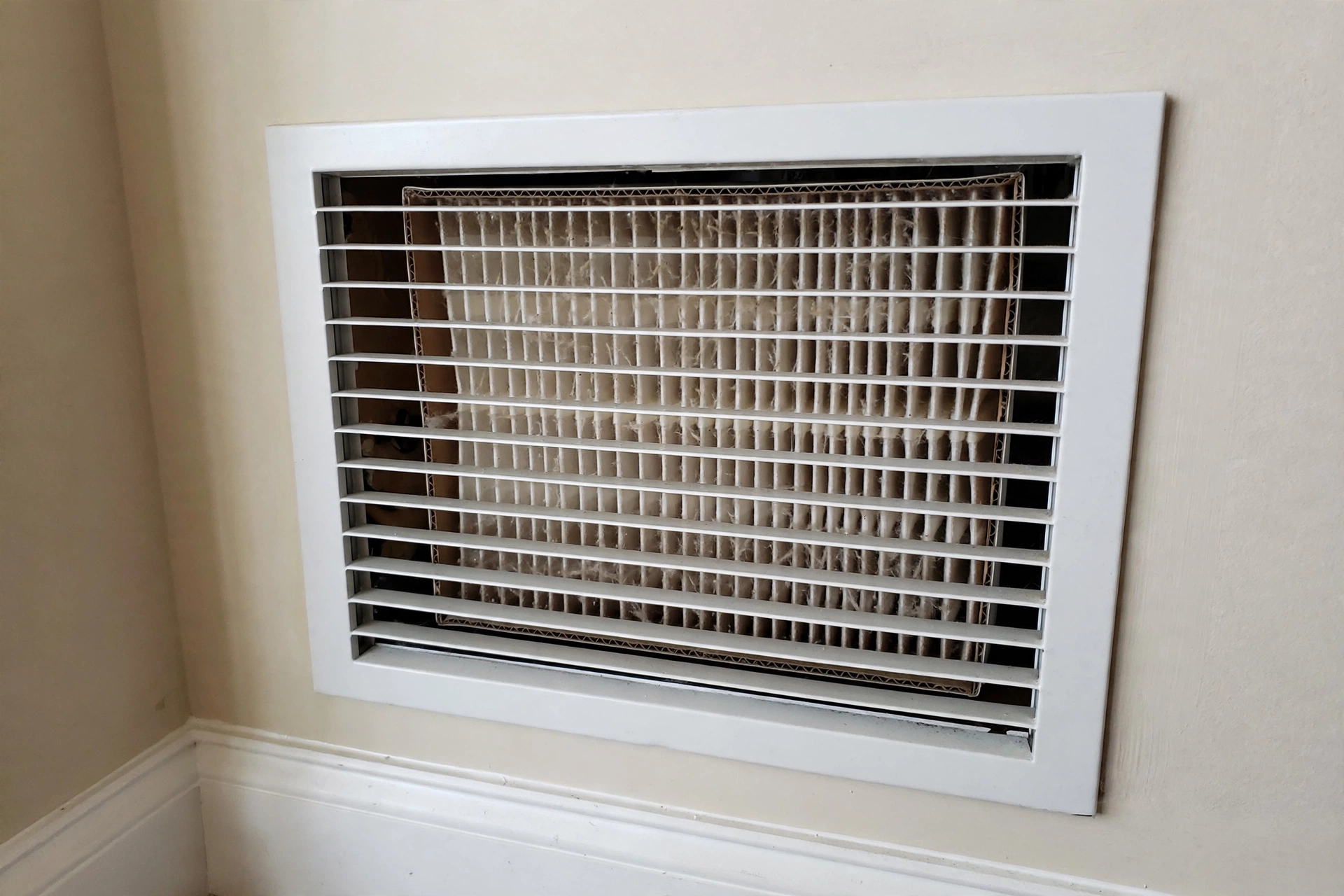
Walk the house for drafts. Older Hamilton homes leak heat through old windows, unsealed attic hatches, and gaps around pipes and wires. Inexpensive weatherstripping and caulk pay for themselves in a single winter. Check that all supply vents are open and unblocked, and that the thermostat has fresh batteries if it uses them.
For farm properties with multiple buildings, make a list of every heated space and its system. An unused tenant house or workshop with the heat turned too low risks frozen pipes. Either winterize unused spaces properly or keep them warm enough to protect the plumbing. Call (571) 561-3454 and we will help you plan the whole property, not just the main house.
What Our Technicians See in Hamilton Homes
Hamilton's small size means every service call teaches us something about the town's heating history. The most instructive are the oil-conversion homes, where we can read the decades in the basement: the capped oil line, the repurposed chimney, the gas furnace installed where the oil burner sat, sometimes with the original oil tank still lurking in a corner. Each conversion tells us how carefully, or carelessly, the work was done.
In-town homes often surprise us with their heating diversity. Two houses on the same street might heat with completely different systems: one with a modern high-efficiency gas furnace, the next with a propane unit from the 1990s, the next with an aging system that predates the current owner's memory. There is no standard Hamilton furnace, which keeps the diagnostic work interesting.
Rural Hamilton properties add the dimension of self-reliance. These homeowners tend to be hands-on, which means we sometimes arrive to find a well-meaning repair attempt that needs professional correction. We never criticize the effort; we just fix it properly and explain what the system needed. The goal is a working furnace and a homeowner who understands it better than before.
What Hamilton teaches, above all, is that small-town service is personal. We remember the houses, the systems, and the people. When we return for a follow-up, we pick up where we left off, not from scratch.
Getting to Your Hamilton Home: Our Service Area Detail
We serve Hamilton's town center and Main Street corridor, the residential streets radiating from downtown, and the rural routes extending in all directions. Farm properties, homes on acreage, and the communities along the roads toward Purcellville, Waterford, and Leesburg are all included.
For rural addresses, good directions help enormously. House numbers can be hard to spot from the road, especially after dark or in winter weather. When you call, describe landmarks: the color of the barn, the side of the road, anything that helps a technician find you on the first try.
Hamilton's position on our western Loudoun route means we typically batch it with Purcellville and Round Hill calls for efficiency. For emergencies, we break the pattern and come directly. Call (571) 561-3454 any time; the emergency line does not observe routing efficiency.