
Heating a Landmark Without Harming It
Waterford's 18th and 19th century buildings were not designed around forced-air heating, and every system in the village is a thoughtful adaptation. We work within those adaptations: no unnecessary openings, no damage to historic fabric, and solutions that respect the building.
Preservation and comfort can coexist. It takes a technician who thinks before cutting.
Stone, Brick, and Thermal Mass
Waterford's masonry buildings hold heat differently than modern framed homes. Thick stone and brick walls moderate temperature swings, which means heating systems cycle differently here. Understanding the building's thermal behavior is part of diagnosing its heating complaints.
Rural Setting, Reliable Response
Waterford's village setting off the main roads does not mean slow service. We plan our western Loudoun routes to include Waterford reliably, in fair weather and foul.
Winters in a National Historic Landmark
Waterford experiences winter the way it has for three centuries: as a rural village surrounded by 1,420 acres of protected farmland, with no suburban heat island to moderate the cold. The open fields around the village allow wind to move freely, and the Catoctin Creek valley can trap cold air on still nights. When winter arrives, Waterford feels it fully.

The village's 18th and 19th-century buildings were constructed long before central heating, and their thermal behavior reflects that. Thick stone and brick walls provide thermal mass that moderates temperature swings, but the buildings also leak heat through old windows, uninsulated sections, and the countless small gaps that three centuries of settling create. Heating a Waterford home means working with the building, not against it.
For homeowners, the key insight is that the heating system and the building envelope are partners. The best furnace in the world struggles in a house that loses heat faster than it can be replaced. In Waterford, weatherization improvements often deliver more comfort per dollar than equipment upgrades, and we say so honestly when the assessment points that way.
The Mill, the Meetinghouse, and the Fair: Waterford Landmarks
Waterford's landmarks read like a timeline of American history. The Waterford Mill, dating to 1818, is the third mill on its site along Catoctin Creek, built to process the region's wheat when the village was a thriving milling center. The Fairfax Meetinghouse began as a log structure in 1741, was rebuilt in stone in 1761, and enlarged a decade later. Its historic cemetery remains accessible.
The Second Street School, built in 1867 by Waterford's Black community with Freedmen's Bureau assistance, served African American students until 1957. The village's small stone jail, built after the Civil War, served until 1936. Arch House Row and the Hague-Hough house, Waterford's oldest at around 1740, line the quiet streets alongside the 1882 Presbyterian church.
The Waterford Fair, hosted annually by the Waterford Foundation, celebrated its 80th anniversary in 2024. The fair's historic homes tour opens private residences to visitors, a reminder that these are living buildings, not museum pieces. People heat them, cool them, and maintain them as homes, which is exactly where we come in.
Heating 18th Century Stone and Brick
Waterford's buildings use materials modern HVAC never anticipated: hand-laid stone, handmade brick, log construction, and timber framing. These materials have virtues, thermal mass that smooths temperature swings, durability measured in centuries, but they complicate heating system design. There are no wall cavities for ducts in a stone wall. Running new distribution through these buildings requires creativity and restraint.
Most Waterford homes heat with systems adapted over decades: a furnace added in the mid-20th century, ductwork threaded through closets and chases, perhaps a later upgrade to higher efficiency. Each layer of adaptation tells a story, and understanding that story is prerequisite to diagnosing problems. We read the building before we touch the equipment.

Preservation easements protect over sixty Waterford properties, which means heating work must respect both the letter and spirit of preservation. No unnecessary openings. No damage to historic fabric. Solutions that a preservation review would approve. This constraint, far from limiting us, produces some of our most thoughtful work.
Masonry, Drafts, and Other Waterford Heating Challenges
Thermal mass cuts both ways. Waterford's stone and brick walls absorb heat during the day and release it slowly, which moderates swings but also means the building takes longer to warm up from a cold start. A furnace sized for a modern framed house may cycle oddly in a masonry building, short-cycling as the thermostat satisfies quickly while the walls are still cold, then running long as the mass absorbs heat.
Drafts are the perennial challenge. Three centuries of settling, original windows, and the inevitable gaps around penetrations let cold air infiltrate faster than many furnaces can compensate. The usual symptoms, cold rooms despite a running furnace, uneven temperatures floor to floor, are often envelope problems wearing a heating system's clothing.
Chimney and venting issues deserve attention in buildings this old. Original chimneys were built for fireplaces, not furnaces, and later adaptations vary in quality. We inspect venting carefully in Waterford homes, because a compromised flue in a 200-year-old chimney is a safety matter that transcends comfort.
Caring for a Landmark Home's Heating System
Fall service in a Waterford home starts with the building walkthrough, not the furnace. We look at how the house is put together, where the heat goes, and where it escapes, before we open the equipment cabinet. This context shapes everything that follows.
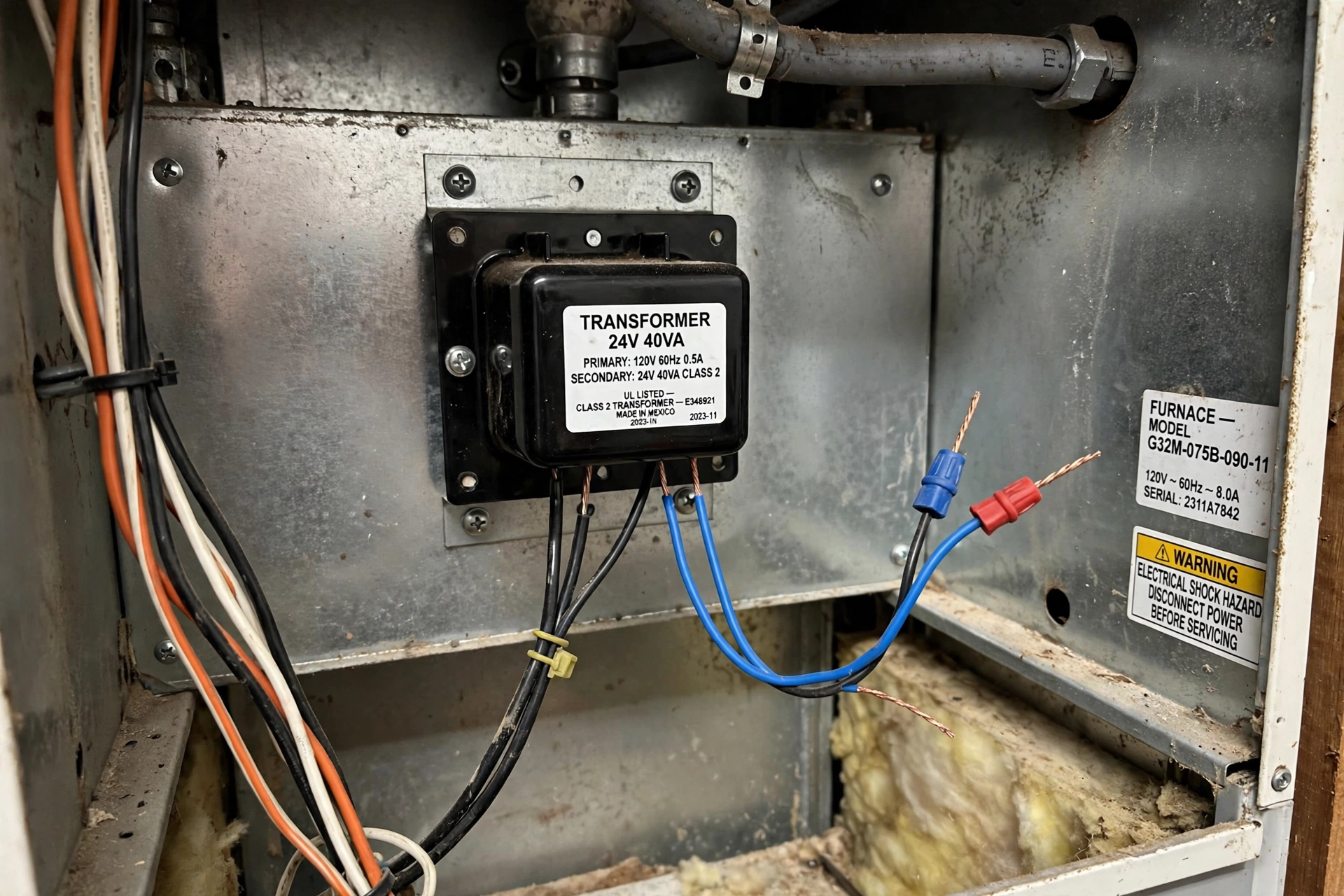
The equipment check covers the standard sequence: ignition, flame, blower, temperature rise, safety controls. But in Waterford, we add venting inspection with extra care, combustion analysis to verify the old chimney is drafting properly, and a frank discussion of whether the distribution system is doing justice to the furnace.
Between visits, the highest-value actions are envelope-focused: weatherstrip the obvious drafts, make sure attic insulation has not been disturbed, and keep the heating system filters changed. In a landmark home, the building is the heating system's partner. Call (571) 561-3454 to schedule a visit that respects both.
What Our Technicians See in Waterford Homes
Waterford is unlike any other place we service, and the heating work reflects that. Every house is a historic resource, every intervention is weighed against preservation, and the solutions we devise here draw on the full range of our creativity. We have run ductwork through 200-year-old floor systems without disturbing a single historic surface, and we consider that a professional achievement on par with any technical repair.
The most common Waterford scenario is a heating system that works but struggles against the building envelope. The furnace is fine; the house leaks heat through centuries-old windows, uninsulated stone walls, and the gaps that time opens in every old building. In these cases, our most valuable service is honest assessment: telling a homeowner that weatherization will do more than a new furnace, even though we sell furnace service, not weatherization.
Masonry buildings teach specific lessons about thermal behavior. A stone house that has been cold for a week takes days of steady heating to bring its walls up to temperature, and homeowners who expect instant warmth are disappointed. Understanding thermal mass helps set realistic expectations and prevents unnecessary equipment upsizing.
What Waterford demands, above all, is humility before the building. These structures have stood for centuries and will stand for centuries more. Our work should leave them better without leaving a mark.
Getting to Your Waterford Home: Our Service Area Detail
We serve the Waterford village and its National Historic Landmark district, the surrounding farmland within the protected 1,420 acres, the properties along Catoctin Creek, and the rural routes toward Lovettsville, Waterford's closest neighbor, and toward Leesburg.
Village streets are narrow and historic; mention parking considerations when you call. For properties with preservation easements, let us know upfront so we plan the work within easement guidelines. We are experienced with preservation-sensitive service and welcome the constraint.
Waterford's location in northern Loudoun means we typically combine it with Lovettsville-area routing. The village's rural setting does not mean slow service; we plan our western routes to include Waterford reliably. Call (571) 561-3454 any time.