Professional furnace replacement for Leesburg and Loudoun County homes.
When repair costs stack up or the heat exchanger cracks, replacement becomes the sensible call. We evaluate your current system honestly, explain your options without pressure, and install the new furnace to code with full testing. Call (571) 561-3454 for a straight assessment of repair versus replacement.
There is no single rule, but the pattern is clear: when a furnace is past 15 years, needs a major repair, and has a history of breakdowns, the money spent on another repair usually buys more comfort as part of a new system. A cracked heat exchanger ends the debate immediately for safety reasons.
We will give you both numbers: the repair cost and the replacement cost, with the honest pros and cons of each. The decision stays yours.
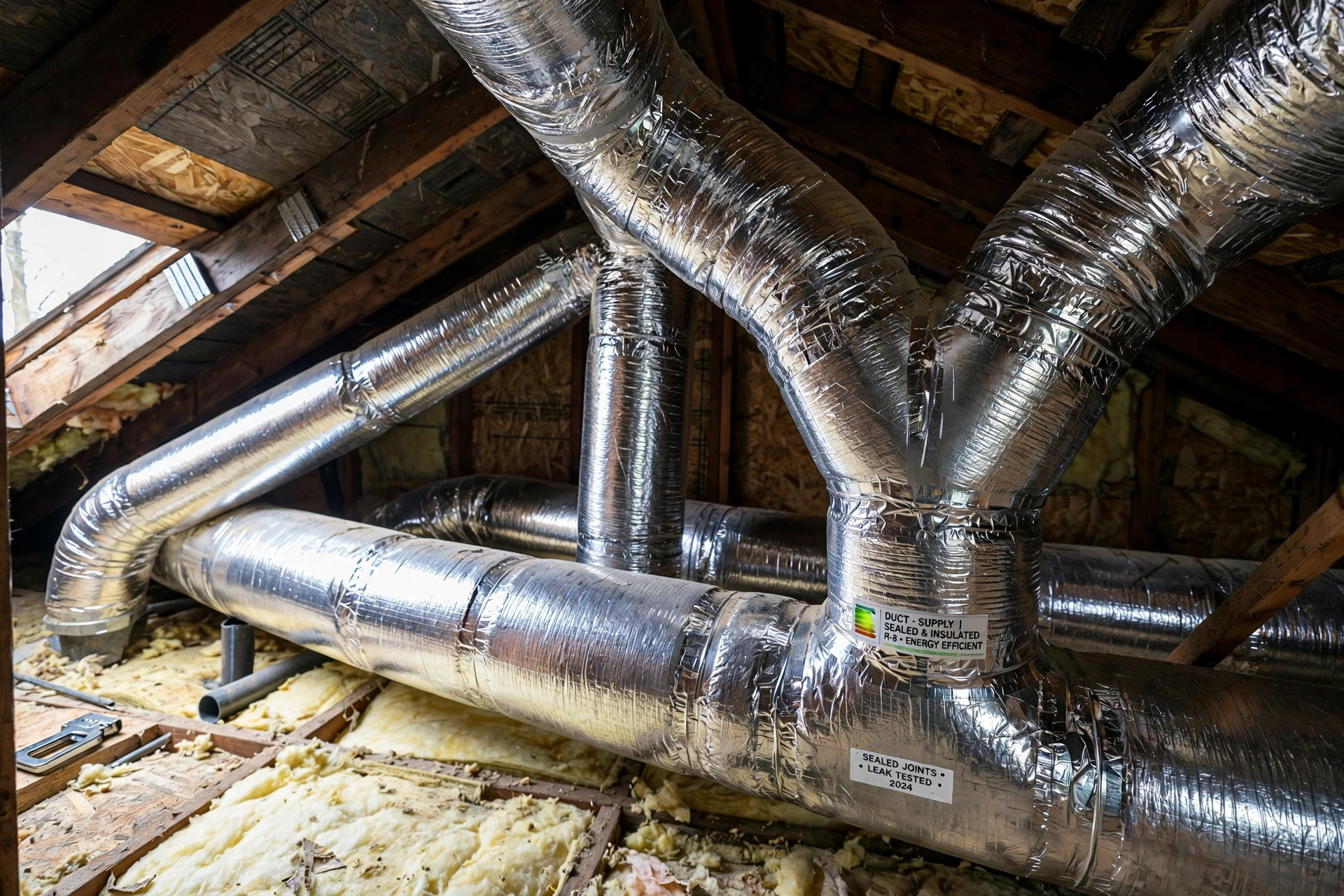
Modern furnaces modulate their output instead of blasting on and off, which means steadier temperatures and quieter operation. Variable-speed blowers improve filtration and even out room-to-room differences. If your old furnace is single-stage, the comfort difference is noticeable from the first week.
Efficiency gains are real but secondary to reliability and comfort for most homeowners. We will explain what the ratings mean in plain terms.
The worst time to replace a furnace is during a no-heat emergency in January, when every contractor is slammed and you are deciding under pressure. If your furnace is aging and repair bills are climbing, a planned replacement in fall gives you time to choose carefully.
Ask for an assessment during your next maintenance visit. Knowing where you stand beats guessing.
The signals stack up: age past 15 years, repair visits getting more frequent, a major failure like a cracked heat exchanger or a dead control board, rooms that never heat evenly despite repairs, and heating bills climbing while comfort falls. Any one alone might mean repair; several together point to replacement.
The honest test is arithmetic plus safety. Add up recent repair spending and weigh it against a new system's reliability and warranty coverage. Safety findings override the math entirely: a cracked heat exchanger ends the repair conversation on the spot.
A planned assessment during maintenance season beats a forced decision during a January no-heat emergency, when every contractor is slammed and you are deciding under pressure. Call (571) 561-3454 for a straight evaluation.
Bring your recent repair history to the assessment if you have it. Knowing which parts have already been replaced, the igniter twice, a capacitor, a control board, helps separate a furnace with one recurring issue from a furnace where everything is wearing out together. The pattern in the history usually makes the recommendation obvious, and we will show you how we read it.
Usually not, and the reason is that every major component is past its typical life at once. The heat exchanger, blower motor, gas valve, and control board have all endured the same 20 years of thermal cycling. Fixing one often just reveals the next weak link a season later.
Parts availability narrows with age. Control boards and inducer assemblies for 20-year-old models get harder to source, which can turn a repair into a long wait in a cold house. What looks like a simple fix becomes a parts hunt.
The exception is a 20-year-old unit with a clean bill of health except for one failed wear part: an igniter, a flame sensor, a capacitor. In that case a repair buys real time, and we will tell you honestly which situation you are in.
Efficiency is worth a realistic look, not a sales pitch. A 20-year-old furnace was built to the standards of its era, and a modern replacement will use less fuel for the same heat. But the savings alone rarely pay for the equipment quickly; comfort, reliability, and safety are the stronger reasons to replace. We will explain the ratings in plain terms so the decision rests on facts.
Straight answers before you call.
Describe what your furnace is doing and we will point you to the right next step.
Call (571) 561-3454Most furnaces serve 15 to 20 years with regular maintenance. Past that, major component failures become increasingly likely.
Often yes, if the indoor coil and outdoor unit are compatible and in good shape. We evaluate the whole system before recommending.
Usually, though a modern thermostat gets more out of a modern furnace. We will check compatibility during the assessment.
The work stays in the utility area. Most homes have heat back by evening, and we clean the work area before leaving.
We handle removal and responsible disposal as part of the job.
No-heat emergencies diagnosed and repaired fast, day or night.
Diagnosis and repair for gas-fired furnaces and their controls.
Repair for electric furnaces, air handlers and heat strips.
Seasonal tune-ups that keep the furnace safe and reliable.
Call now and describe what is happening. We will take it from there.
Call (571) 561-3454