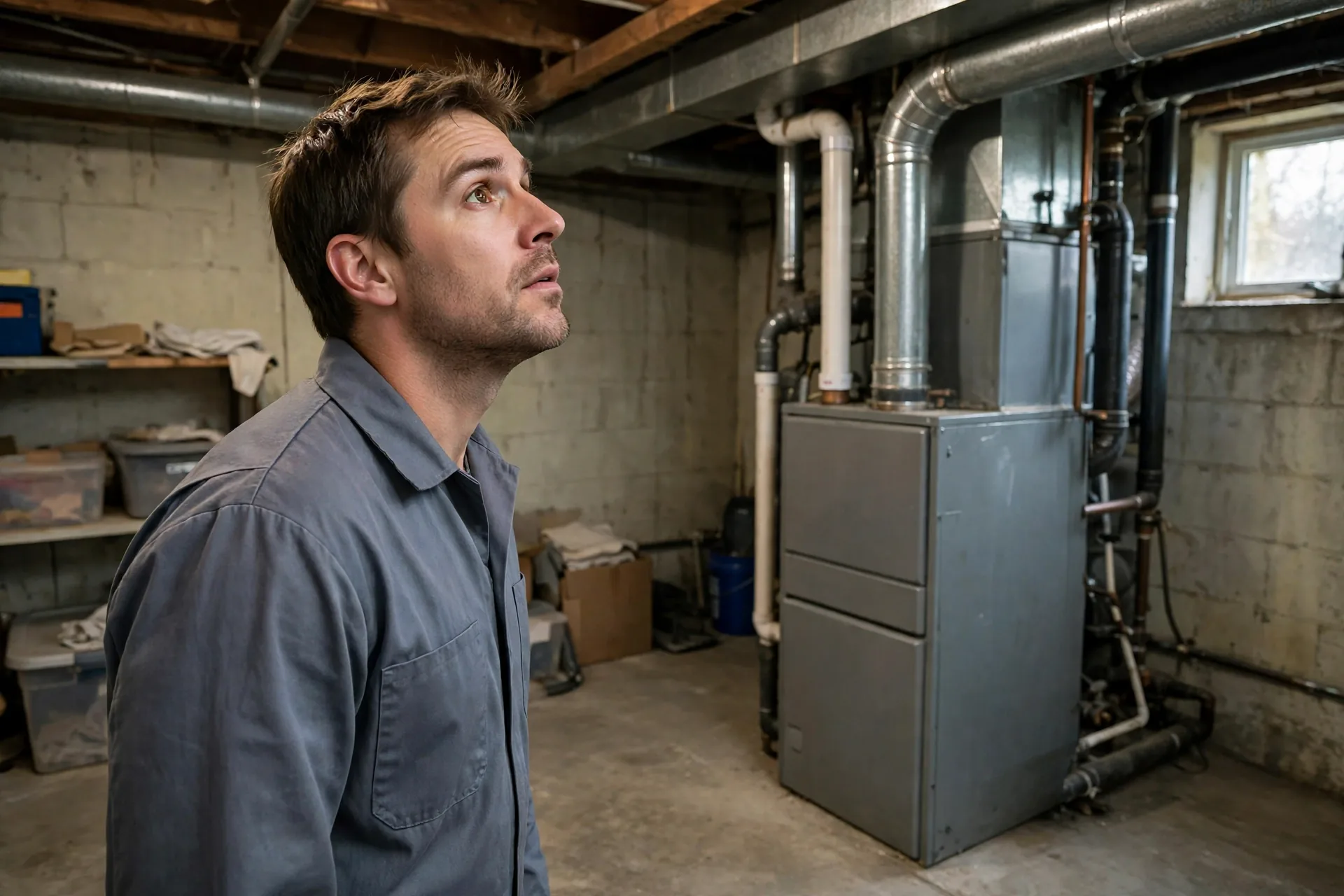
A burning odor drifting from the vents can be nothing more than summer dust meeting hot metal, or it can be the first warning of a part failing inside the cabinet. Sorting one from the other matters in Loudoun County homes, especially before a cold night.
Most first run burning smells come from dust that settled on the heat exchanger and duct surfaces during the off season, and that odor fades within an hour or two of steady running. Smells that return every cycle, grow stronger, or resemble hot wiring, melting plastic, or burning rubber point to an overheating motor, worn belt, or electrical fault instead. When the odor feels sharp or alarming, call Loudoun Furnace Pros at (571) 561-3454 before running the system again.
The benign explanation shows up every autumn across Loudoun County. Dust settles on heat exchanger surfaces, burner parts, and the inside of nearby ductwork while the furnace sits idle through summer. At the first real cold evening, that dust cooks off and sends a hot, slightly acrid smell through every register in the house. In a Leesburg home that has been closed up, the odor can seem strong for the first run. It should steadily weaken as the cycle continues and be gone entirely after a few normal heating cycles. Houses that sat closed through a humid summer often produce a stronger version of this smell, because more dust and fiber had undisturbed months to collect.
Mechanical wear produces a second family of smells. A blower motor that is overheating from worn bearings or a failing capacitor gives off a hot, oily odor near the cabinet, sometimes with a faint hum or slower startup. On older belt driven blowers, a belt that is glazed, cracked, or slipping smells distinctly like burning rubber whenever the fan runs. Those odors do not fade with time. They return at the same point in every cycle, because the same stressed part heats up each time the furnace fires. A motor that only overheats after twenty minutes of running can hide during a brief test, which is why your notes on odor timing matter so much.
Electrical and combustion faults are the serious end of the scale. Wire insulation that has grown brittle can scorch where a connection loosens, producing a sharp chemical smell that lingers around the furnace room. More concerning still, a cracked heat exchanger can distort burner flames, scorch nearby components, and allow combustion gases where they do not belong. Warning signs that raise the stakes include soot near the burner opening, flames that roll or change color when the blower starts, and any carbon monoxide alarm sounding in the home.
Your nose and a notebook are the right tools here. These observations are safe from outside the cabinet and they help a technician judge how urgently the system needs attention.
Some boundaries here are absolute. If you smell gas, leave the house right away and call the gas provider or 911 from outside. A strong electrical burning smell means switch the system off at the breaker and keep it off until it is inspected. Never open the burner compartment or touch gas lines, valves, or the heat exchanger yourself, and treat any carbon monoxide alarm as an emergency, not a nuisance.
Treat this as an emergency when a carbon monoxide detector alarms, when a gas or rotten egg odor accompanies the burning smell, or when smoke is visible near the furnace. Get everyone outside first, then call for help from a safe location. A sharp electrical odor that grows while the system runs also qualifies: shut the power off and do not restart it. Older Leesburg homes deserve extra caution, because aging wiring leaves less margin for error.
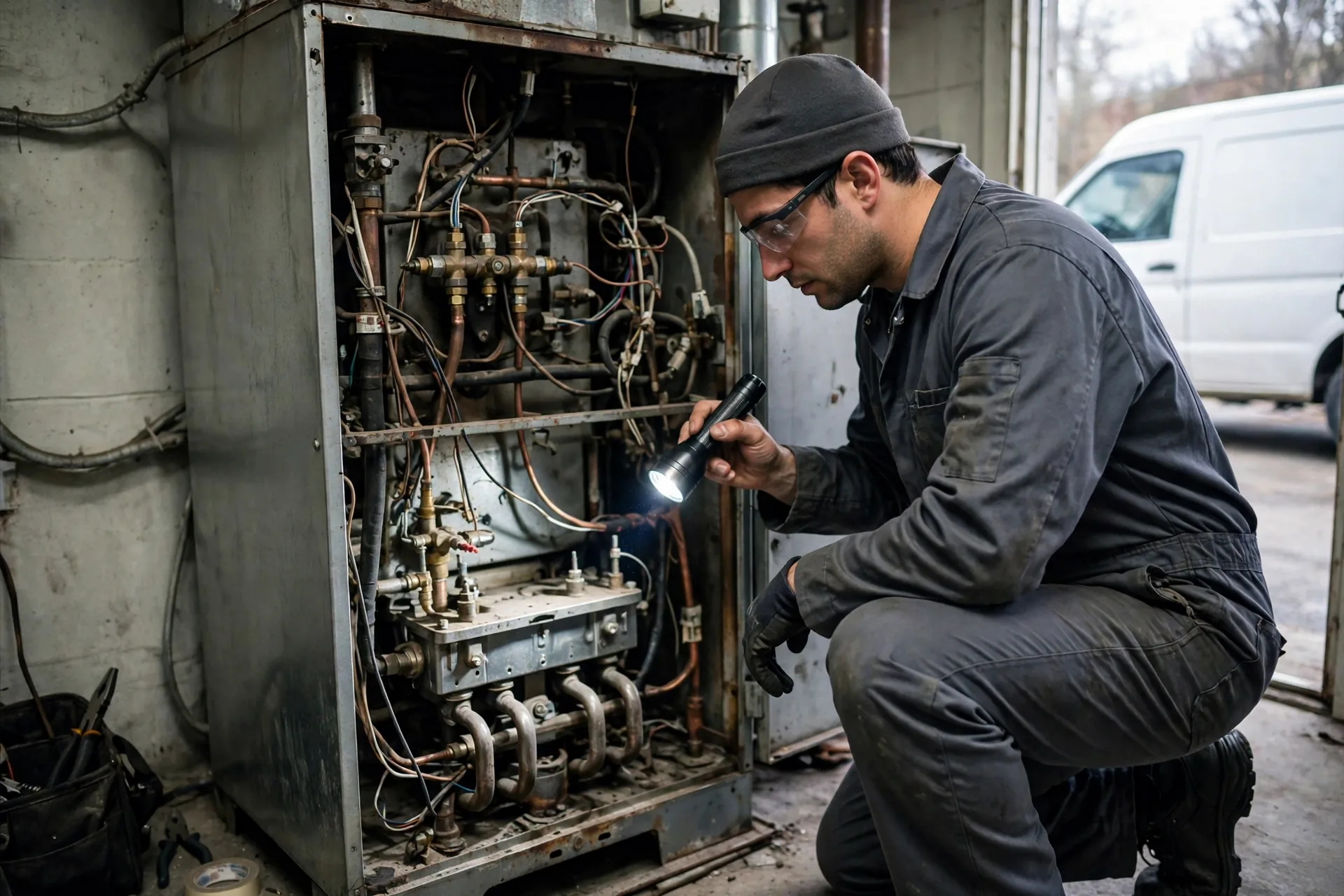
The visit begins with the system cool and the power off. The technician inspects the blower compartment, wiring connections, motor housing, and belt condition, looking for scorch marks, melted insulation, or the glossy residue an overheating motor leaves behind. Your description of the odor and when it appears guides where the flashlight goes first. The burner area is examined for soot patterns and flame behavior once the furnace is safely brought back into operation under supervision. Photographs of any damaged wiring or heat discoloration are taken before parts are disturbed, so the evidence stays clear even after the faulty component comes out and the cabinet is cleaned.
Testing follows in sequence. Motor current draw is measured against its rating, capacitor strength is checked, and temperatures around the cabinet are compared while a full cycle runs. Combustion testing and a close visual inspection of the exchanger come next when symptoms point that way, which is the heart of our Heat Exchanger Repair work. Each step either clears a suspect or confirms it, so the odor gets traced to a part rather than a guess.
Findings are explained in writing before work starts, whether the answer is a motor at the end of its life, a belt that needs replacing, wiring that must be corrected, or an exchanger concern that changes the whole conversation. If the system is safe to run in the meantime, you will hear that plainly. If it is not, you will hear that plainly too, along with the reasoning and the options that follow from it. If an exchanger concern needs a second testing method to confirm, that step is described honestly as well, including realistic timelines, rather than rushed into a verdict during a single busy winter visit.
Odor questions tend to arrive with some worry attached, so here are calm, direct answers.
Describe what your furnace is doing and we will point you to the right next step.
Call (571) 561-3454Dust and household fibers settle continuously, and a vacant house gives them undisturbed time to collect on warm surfaces and in return ducts. The next startup cooks that fresh layer off, briefly repeating the first run effect. If the odor clears quickly each time, dust remains the likely story. An odor that lingers or strengthens deserves an inspection instead.
It often means a component is running hotter than intended, commonly a blower motor under strain, a cabinet heated by restricted airflow, or dust burning off internal surfaces. Context separates the causes: a smell paired with weak airflow suggests strain, while one that fades after startup suggests dust. Persistent hot metal odors should be checked rather than tolerated all winter.
Yes, on older belt driven blowers a slipping or glazed belt generates friction heat every time the fan runs, and the odor matches burning rubber closely because that is essentially what is happening. The smell typically tracks the blower rather than the burners, appearing when air moves. Belt condition is easy for a technician to confirm during an inspection of the blower compartment.
For sharp electrical odors, smoke, gas smells, or any alarm, yes, leave it off and call. For a mild dusty smell on the very first run of the season, watching one cycle while it fades is reasonable. When you cannot tell which situation you have, err toward caution and describe the odor by phone for guidance.
The technician observes the burner flames for stability and color, tests the air around the furnace for carbon monoxide, and inspects the exchanger surfaces and venting path for cracks, rust, or blockages. Measurements are compared against what the equipment should produce when it burns cleanly. Anything outside that range gets explained with the reading itself, not just a conclusion.
Squeals, hums, and bangs that frequently travel together with a stressed blower.
When a system that smelled wrong yesterday refuses to start at all today.
Inspection and repair options for the component that keeps combustion gases separate.
Immediate help for alarms, gas odors, smoke, or a furnace shut down for safety.
Odors are information. Call, describe what you noticed and when, and get the source identified properly.
Call (571) 561-3454