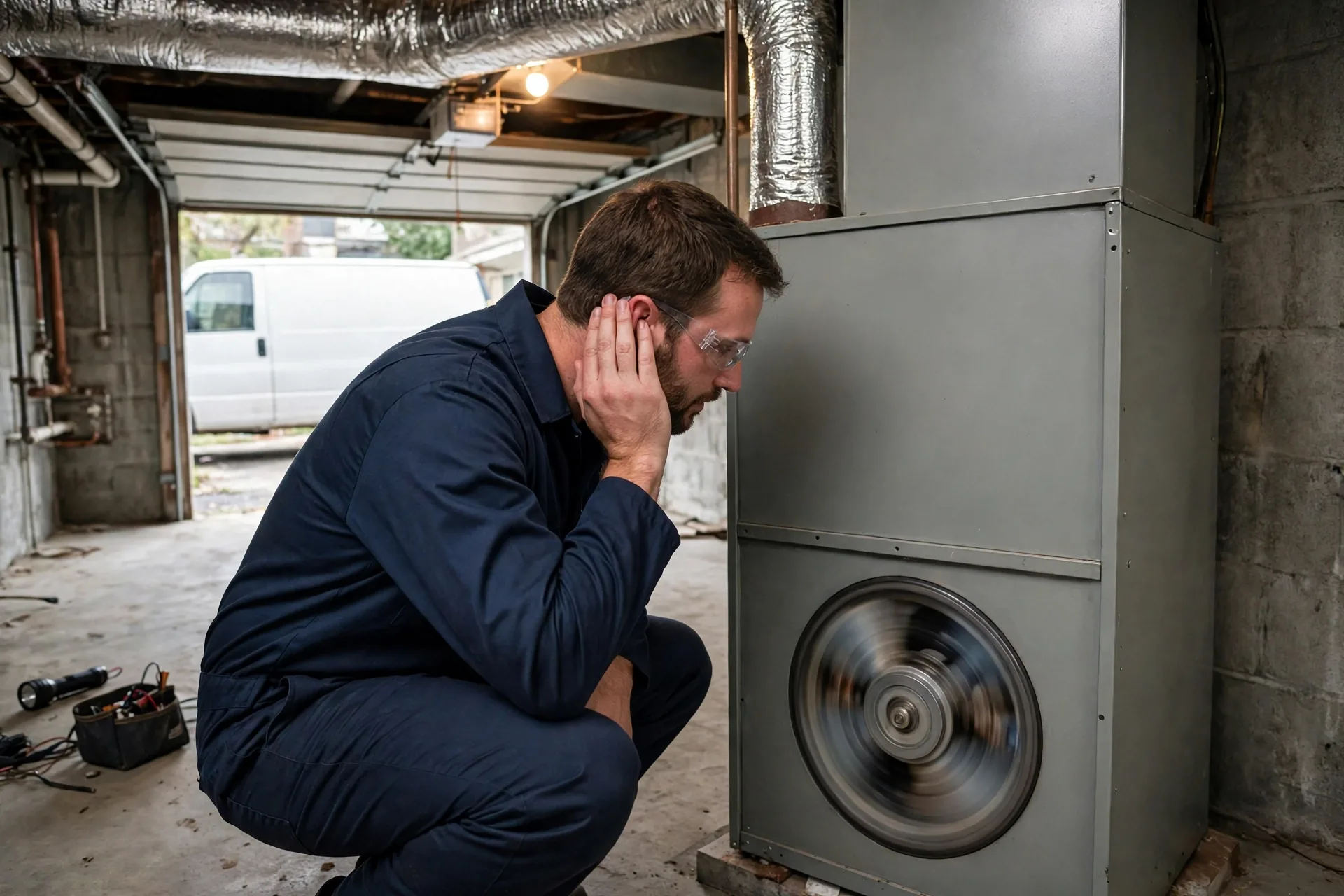
A furnace talks during every cycle, but a new bang, squeal, or scrape is not part of its normal vocabulary. In Loudoun County homes, each sound tends to match the moment it occurs, and matching sound to moment is how the faulty part reveals itself quickly.
A new furnace noise is information, not just irritation. A boom in the first seconds suggests burners lighting late, a squeal that follows blower speed suggests tired bearings, and a rattle that comes and goes often traces to sheet metal or a loose panel. Sounds in older homes near Waterford travel through long duct runs and can seem louder than their source. Note when yours happens during the cycle, and if it is sharp, sudden, or growing, call Loudoun Furnace Pros at (571) 561-3454.
The loudest startup sound deserves the fastest respect. When burners light late, gas gathers for an extra moment and then ignites at once, producing a boom or deep thump from the cabinet in the first seconds of the cycle. Dirty burner surfaces and a weakening igniter are the usual reasons ignition lags. Each delayed light stresses the heat exchanger, so a repeating boom is never a wait until spring item. Contrast that with the softer ticks and pings that follow a cycle, which are usually duct metal expanding as it warms and settling as it cools. Volume matters here: a faint pop is common, while a boom that rattles the cabinet door is a different event entirely.
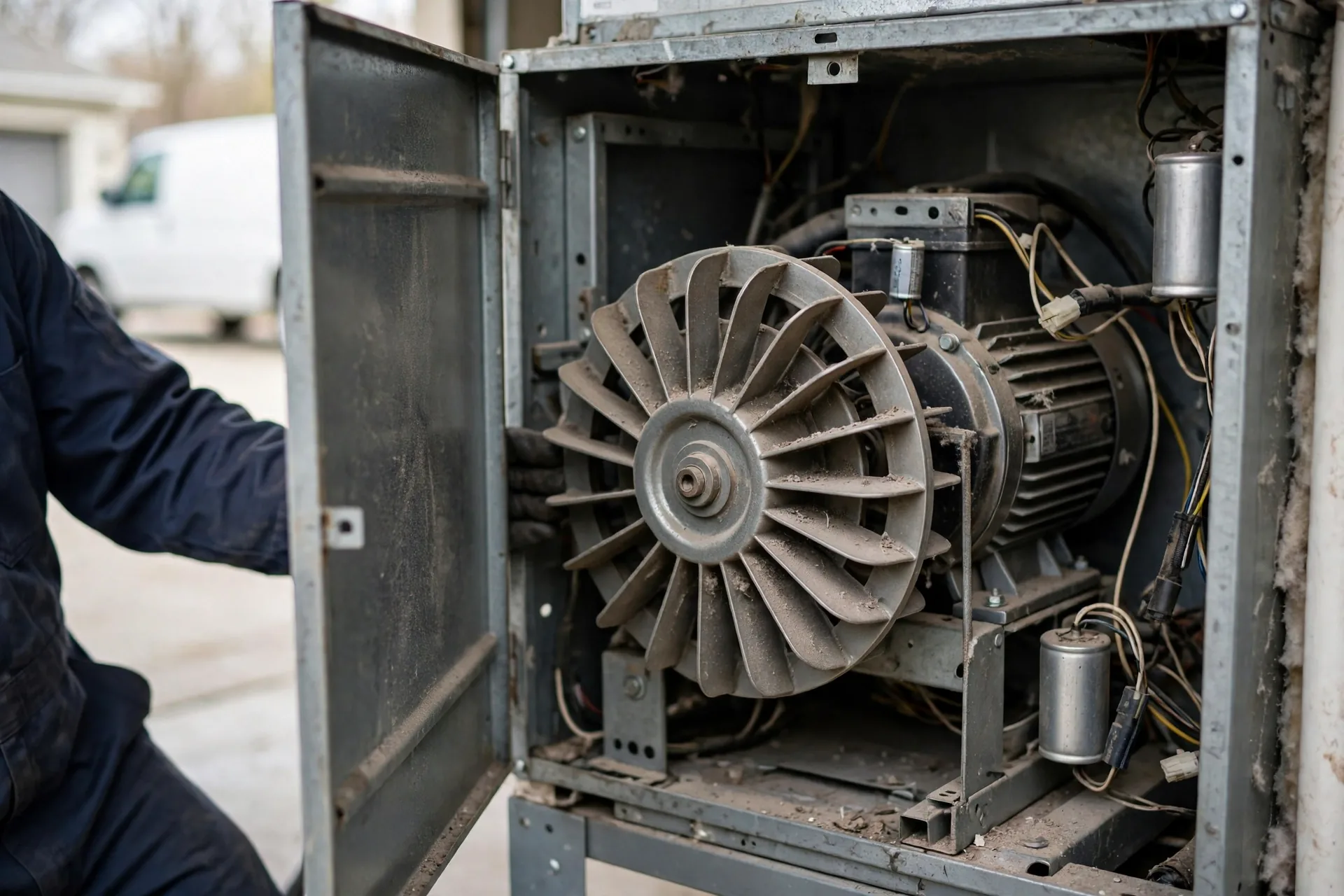
Running sounds mostly belong to the parts that spin. Blower bearings wearing thin announce themselves as a squeal or whine that climbs in pitch as the blower reaches speed, and the sound may ease once the motor warms. The inducer motor has its own smaller voice at the very start of the cycle, and a grinding or chattering inducer points to bearings or a wheel contacting its housing. A blower that hums without moving air has stalled under load, a pattern tied to a failed capacitor or a motor at the end of its strength. That distinction helps, because a motor sound will change with speed while a duct sound often stays tied to airflow volume alone.
The remaining family is structural rather than mechanical. Loose access panels, a filter frame sitting slightly crooked, duct joints with a failed fastener, and dampers that flutter in moving air all rattle, buzz, or vibrate in rhythm with the blower. These sounds often seem to come from a bedroom register rather than the utility room, because ducts carry vibration efficiently through a quiet house at night. In newer Ashburn homes with long flex runs, even a modest cabinet vibration can present as an impressive rattle several rooms away from its true source.
You cannot repair most furnace sounds from the hallway, but careful listening can cut the search in half before a technician arrives.
Listening is the limit of safe checking here. If you smell gas, leave the house and call the gas provider or 911 from outside. Never open the burner compartment, never touch gas lines, valves, or the heat exchanger yourself, and switch the system off at the thermostat if you hear scraping, grinding, or a loud boom at startup.
Some noises mean damage is happening in real time. A loud boom each time the burners light, metal scraping that rises with blower speed, or any harsh sound paired with a burning smell should stop the system until it is checked. On a cold Loudoun night that shutdown feels like a hard choice, but a blower tearing at its housing or burners lighting late can turn a contained repair into a far larger one within a single evening of cycles.
Noise diagnosis runs the furnace deliberately and listens stage by stage. The technician starts the cycle, notes the exact second each sound appears, and uses a listening tool at the inducer housing, the burner area, the blower compartment, and nearby duct joints to separate mechanical noise from metal noise. Blower speed is varied where the controls allow it, because a sound that tracks speed belongs to rotating parts, while one that stays constant usually belongs to airflow or structure. The room registers are checked during the same run, because a repair that quiets the cabinet but leaves a grille buzzing has not solved the complaint you called about.
Most running noise repairs land on our Blower Motor Repair visits, covering bearings, wheels, motors, and capacitors, while loose panels and duct joints are secured and startup booms are traced to the burners and igniter that caused them. Every finding is explained in writing before work starts, with the noisy part identified and its condition described, so the repair you approve is the one the evidence supports. Panel screws, damper positions, and joint fasteners are worked through in order, so a simple structural source is not mistaken for a failing motor or bearing set.
Quiet is then verified across several complete cycles, listening at the cabinet and again at the registers where you first noticed the problem. Some gentle duct ticks may remain as part of how your particular system sounds, and those are identified honestly rather than chased. You will know which sound was repaired, which sounds are ordinary for your furnace, and which future change in volume or timing should prompt another call. You also get a short note on what was tightened or adjusted in the duct system, alongside the part work done inside the cabinet itself today.
Homeowners describe sounds better than they expect. These are the follow up questions we hear.
Describe what your furnace is doing and we will point you to the right next step.
Call (571) 561-3454Ductwork is an efficient sound carrier. A vibration that begins at a loose panel or duct joint rides the metal runs and can emerge at a register two rooms away sounding louder than it did at the source, especially at night when the house is quiet. That is why diagnosis compares volume at the cabinet and at several registers before choosing where to look first.
A groan as the blower begins turning often means the motor is straining to start: worn bearings resisting the first rotation, or a capacitor too weak to give the motor its starting push. The groan may fade once the wheel is spinning, which makes it easy to dismiss. Repeated strained starts shorten motor life, so the pattern deserves testing rather than patience.
Yes. Large flat duct sections can flex suddenly when blower pressure changes, a movement called oil canning, and the resulting bang can sound startlingly like something mechanical. The giveaway is timing: duct bangs tend to follow blower starts and stops, not the burner ignition moment. A technician separates the two by watching pressure, timing, and where the sound is loudest during a controlled cycle.
Bearings and belts both change behavior with temperature. A dry bearing may quiet as its remaining lubricant warms and thins, and a belt may grip better once it is warm, so a morning only squeal can vanish by midday while the wear behind it continues. A sound that depends on temperature is still a sound worth reporting, with its schedule noted.
Rotating parts produce sound at frequencies tied to their speed, so a whine that climbs in step with the blower almost always lives in the motor, its bearings, or the wheel. A whine that holds one pitch while airflow changes points elsewhere, toward a transformer or an inducer running at a fixed speed. That distinction, noticed during a normal cycle, shortens diagnosis considerably.
Clicking starts and stops on repeat often share controls with the sounds you hear.
A new sound arriving with a sharp smell needs the safety steps on this page first.
Bearings, wheels, motors, and capacitors behind most running noises, repaired.
Booms, grinding, and noise with a smell get priority handling around the clock.
Tell us when in the cycle your furnace performs and how the sound has changed. That description is our first diagnostic tool.
Call (571) 561-3454