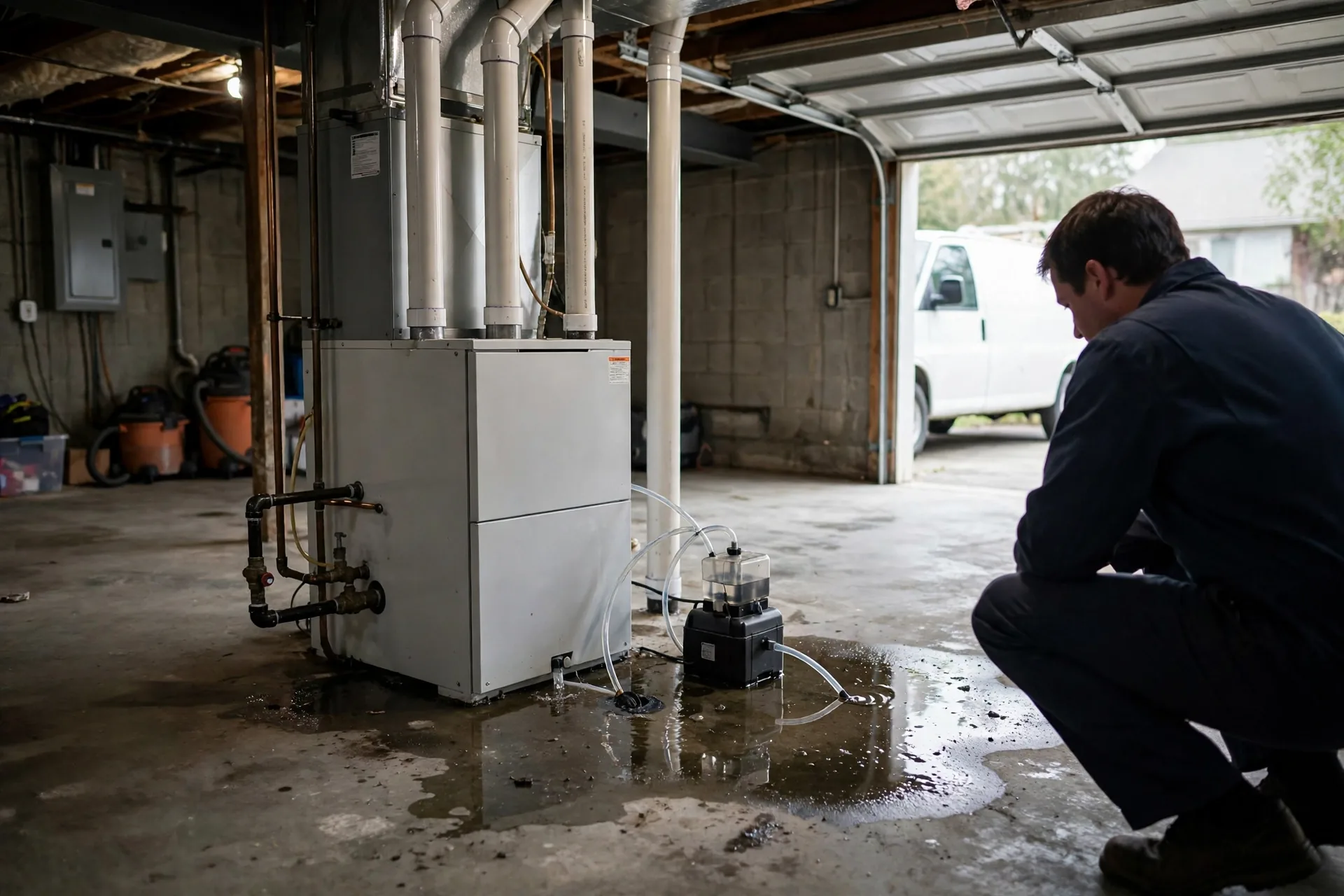
Modern furnaces in newer Ashburn and Sterling subdivisions produce water as part of normal operation, and that water is supposed to leave quietly through a drain. When a puddle spreads across the basement floor instead, something along that path has clogged, cracked, or stopped pumping.
A high efficiency condensing furnace creates water whenever it runs, collecting it in a trap and drain line that leads to a floor drain or a small condensate pump. Pooling usually means that line is clogged, the trap is blocked, the collection pan has cracked, or the pump has failed. Note whether the puddle grows while the furnace heats or while the air conditioner runs, then call Loudoun Furnace Pros at (571) 561-3454 to have the drain path traced.
Condensing furnaces earn their efficiency by cooling exhaust gases until water vapor turns liquid, and that condensate must drain continuously while the burner runs. The first failure point is the trap and drain line, where algae, sediment, and construction debris slowly narrow the passage during Loudoun freeze and thaw winters. Once the line backs up, water fills the collector box and spills from the cabinet base or a safety switch shuts the furnace down mid cycle. Homes that sit with the system off for stretches often grow the worst blockages. The trap itself is a small reservoir meant to block exhaust gases, and when it dries out over summer or fills with grit, water finds the next easiest exit, usually a seam at the cabinet base.
The hardware itself can also give way. The plastic collection pan and drain fittings inside the furnace grow brittle with years of heat cycles, and a fine crack lets water weep steadily even when the drain line is clear. Where the furnace sits above a finished space or lacks a floor drain, a small condensate pump lifts the water to a sink or laundry line. When that pump fails, its reservoir fills, overflows at the cabinet, and sometimes trips a shutoff that homeowners mistake for a furnace breakdown.
Two nearby sources get blamed on the furnace unfairly. A whole house humidifier mounted on the ductwork can leak from a worn valve, a cracked feed line, or a saturated pad frame, sending water down the cabinet side. In summer, the air conditioning coil above the furnace drains through much of the same piping, so a clog there pools at the furnace base while the heating system sits innocent. Noting which season and which system is running when the puddle grows separates these causes quickly. A drain line routed through an unheated crawl space can also crack during a hard cold spell, leaking only when the thaw lets water move again.
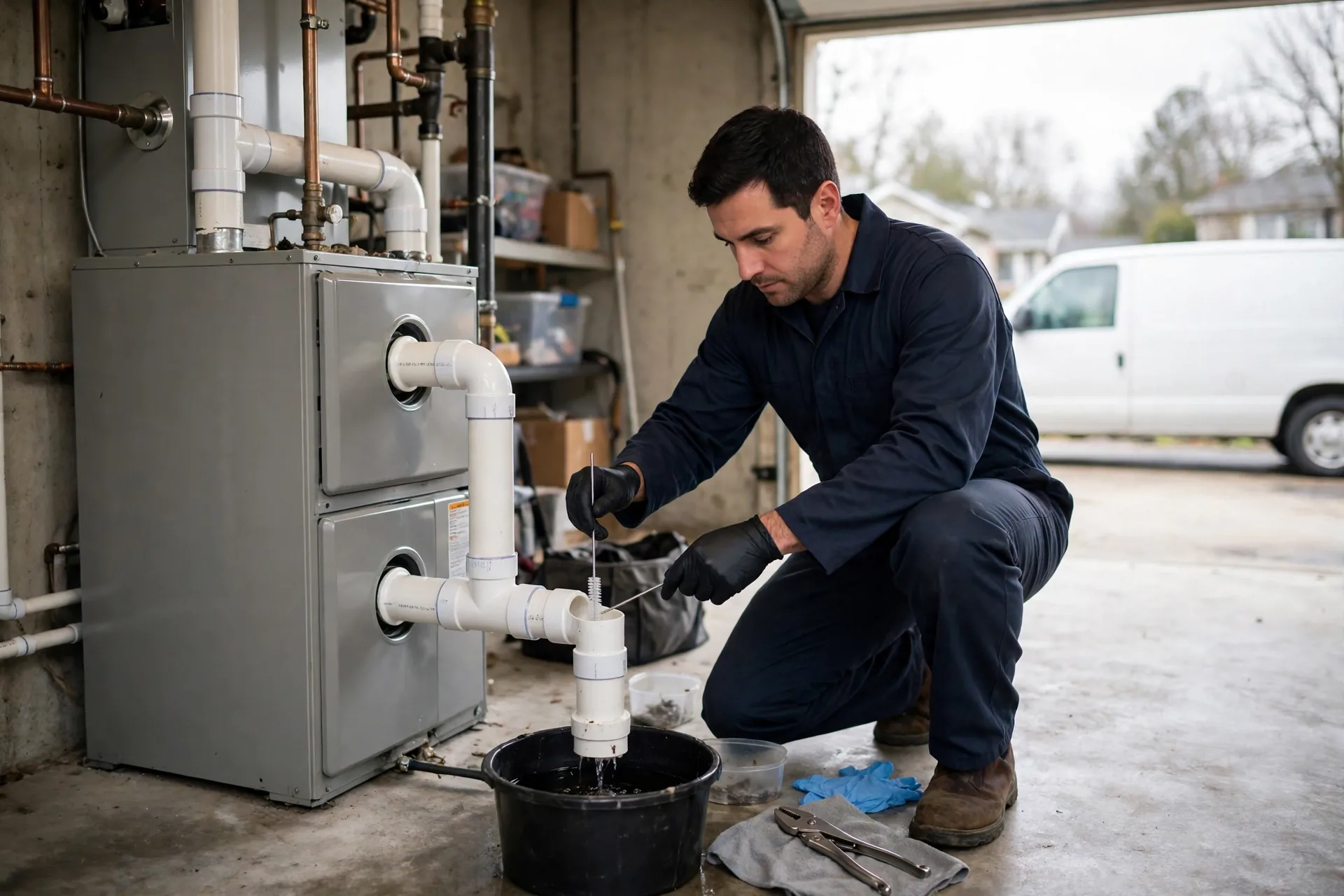
You can map the leak surprisingly well from outside the cabinet. These checks keep your hands off internal parts while still giving a technician a running start.
Observation stops where panels and plumbing begin. If you smell gas, leave the house right away and call the gas provider or 911 from outside. A strong electrical burning smell means switch the system off at the breaker, which matters doubly when water sits near wiring. Never open the burner compartment or touch gas lines, valves, or the heat exchanger yourself, and keep clear of any outlet or switch the water has reached.
Water becomes urgent when it spreads toward electrical outlets, the breaker panel, or wiring, because that combination leaves no safe margin. A leak above a finished ceiling is equally serious: condensate can soak drywall quietly until the ceiling stains or sags, turning a drain problem into a repair project. Standing water around a furnace that has shut down during a cold snap deserves a same day call, since the drain fault and the heat loss share one cause.
The technician starts at the puddle and works backward. Water stains, mineral tracks, and damp fittings reveal where the leak actually begins, which is often higher than the spot where water lands. The condensate trap comes out for inspection, the drain line is checked along its full run to the floor drain or pump, and the pump reservoir is tested for a float that moves freely and a motor that answers when it should. Ambient details get noted too, including whether the floor slopes toward the drain and whether older water marks on the wall suggest this leak has started and stopped before during earlier heating seasons in this house.
Clearing and testing happen in sequence. Blockages are flushed from the trap and line, cracked pans or fittings are identified by running the furnace and watching the condensate form and travel, and the humidifier and cooling coil drains are ruled in or out depending on the season. This drain work sits inside the broader combustion and venting checks covered by our Gas Furnace Repair service, because condensate problems and exhaust problems often develop together on condensing equipment.
Before anything is replaced, the finding is explained in writing before work starts, with the failed part or blockage identified and the repair path laid out plainly. After the fix, the system runs through a full heating cycle while the drain is watched end to end, confirming that water leaves through the pipe instead of the cabinet base. You also get simple guidance on keeping the trap and line clear between visits. If a pump or pan needs replacing, the replacement is matched to the furnace drain outlet and tested under a real condensate load, not just a quick pour of water from a bottle at the sink.
Most leak questions are really about where the water comes from in the first place, so start here.
Describe what your furnace is doing and we will point you to the right next step.
Call (571) 561-3454Colder weather means longer burner run times, and a condensing furnace produces water for every minute it fires. Longer runs also mean the exhaust gases cool more completely in a cold venting run, adding to the total. A drain that barely copes on a mild day can fall behind during a January cold stretch, which is when marginal blockages finally show themselves as puddles.
Homeowners sometimes try household cleaners or bleach, but those can damage plastic traps, pump seals, and nearby finishes, and they rarely clear a compacted blockage anyway. The safer route is a proper mechanical clearing and flush by a technician who can open the trap, clean it fully, and confirm flow afterward. Guesswork with chemicals tends to postpone the real fix.
It collects first in a small trap at the furnace, then travels by gravity through plastic tubing to a floor drain, a laundry sink, or a condensate pump that lifts it to a drain line. The path is simple but unforgiving: any sag, clog, or failed pump along the way sends the water back toward the cabinet, which is why tracing the whole route matters.
Concrete tolerates occasional dampness, but standing water works into stored belongings, baseboards, and any finished flooring nearby, and it rusts the furnace cabinet feet and nearby fasteners over time. The bigger concern is what the puddle announces: a drain fault that can grow until a safety switch stops the heat entirely. Small leaks are best treated as early warnings.
In many Loudoun homes, yes. The cooling coil sits above the furnace and its condensate often joins the same trap or drain line, which is why a summer clog can look exactly like a furnace leak. Telling your technician which system was running when the water appeared saves real diagnostic time and points straight at the guilty half of the shared path.
A full condensate trap can interrupt cycles in a pattern that mimics other faults.
When drain trouble shuts the burners down, the blower may keep moving cool air.
Burner, venting, and condensate faults on gas systems diagnosed as one picture.
Fast help when leaking water and lost heat arrive on the same cold night.
A puddle today is a shutdown tomorrow. Call, say when the water appears, and get the drain path sorted.
Call (571) 561-3454