
Data Center Alley Meets Bedroom Communities
Ashburn is famous for its data centers, but the people who keep them running live in neighborhoods like Ashburn Village, Ashburn Farm, and Brambleton. Those homes span three decades of construction, which means three generations of furnaces: 1990s single-stage units, 2000s mid-efficiency models, and recent high-efficiency systems.
We see the full range every week. The diagnostic approach adapts to the equipment, not the ZIP code.
Why Ashburn's Newer Homes Still Call
Newer does not mean trouble-free. Brambleton and Loudoun Valley homes with builder-grade furnaces often develop the same issues as older units: weak capacitors, clogged condensate drains, and thermostats fighting multi-zone setups. The difference is that problems in newer homes are usually simpler and cheaper to fix.
If your home is under ten years old and the furnace is acting up, call before a small issue becomes a warranty question.
Townhouse Furnaces: Small Spaces, Specific Needs
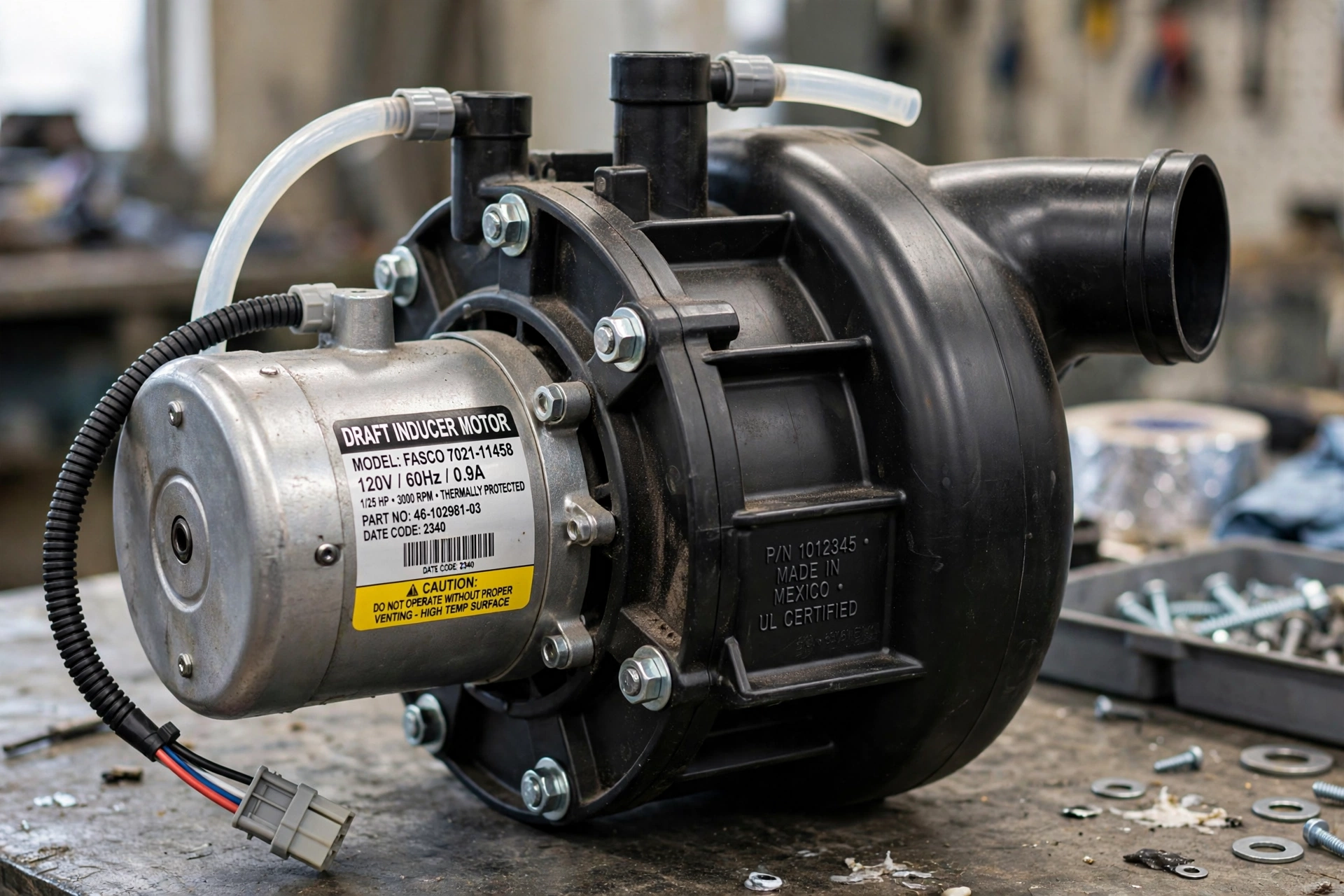
Much of Ashburn lives in townhouses where the furnace sits in a tight utility closet or attic nook. Compact installations run hotter and breathe harder, which accelerates wear on igniters and blower motors. Filter access is often awkward, so filters get neglected, which accelerates everything else.
Tell us it is a townhouse when you call. The technician brings the right expectations and the right tools for tight spaces.
How Loudoun County Winters Test Ashburn Furnaces
Loudoun County winters do not mess around. January lows regularly dip into the teens, and the freeze-thaw cycles of February and March punish heating equipment in a specific way: the furnace runs hard during a cold snap, rests during a warm spell, then slams back to full output when temperatures crash again. That stop-start pattern wears igniters, stresses heat exchangers through thermal expansion and contraction, and exposes weak capacitors that might have survived a milder season.
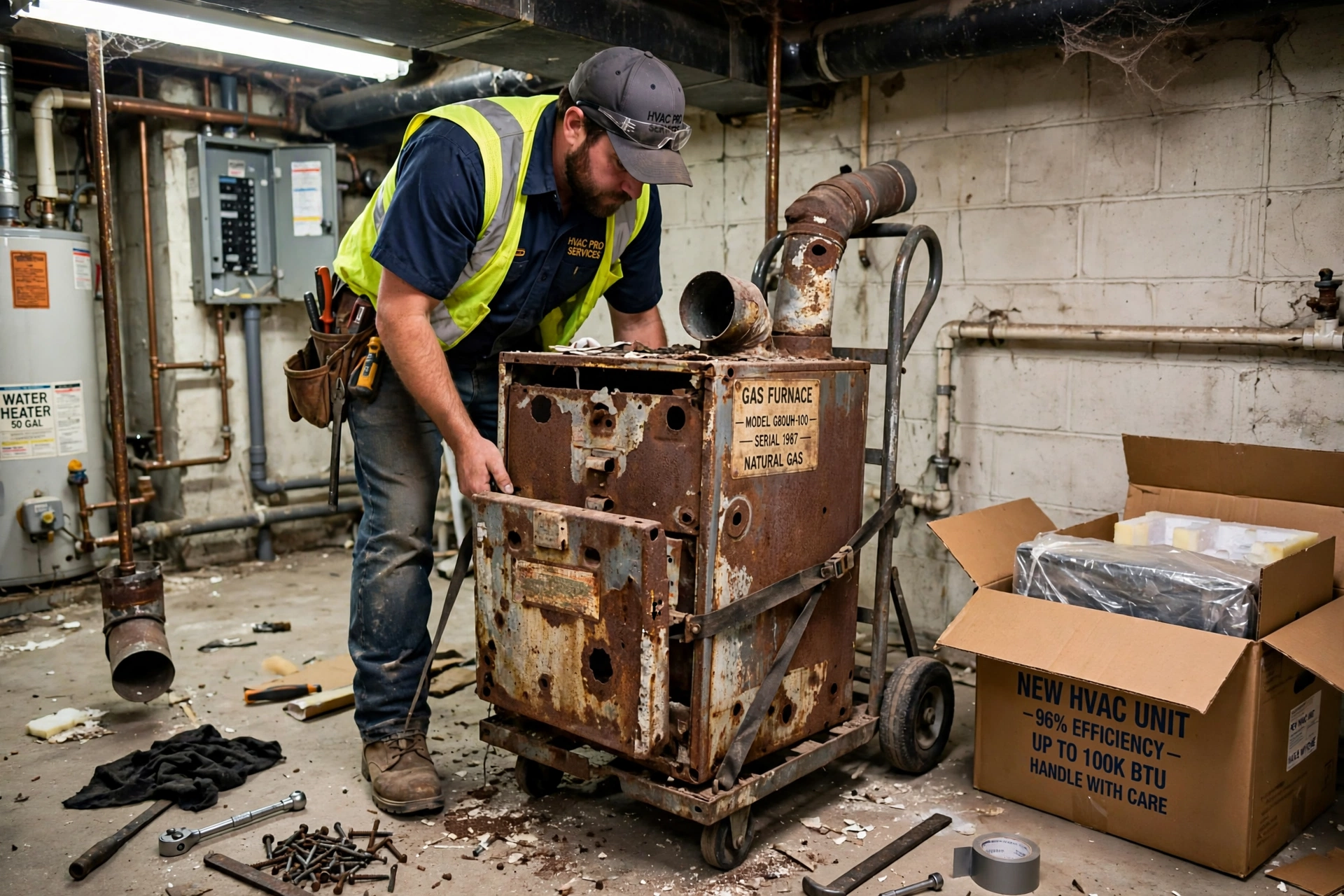
Ashburn's position in the eastern part of the county means it catches the full force of nor'easters rolling up the coast, plus the occasional polar vortex dip that sends temperatures into single digits. During those stretches, a furnace that was limping along in November simply quits. We see the pattern every year: the first deep freeze generates a wave of no-heat calls from systems that were already marginal.
Humidity adds another wrinkle. Loudoun County's damp winters mean condensation management matters, especially for high-efficiency furnaces with condensate drains. A clogged drain in January can shut down a furnace as surely as a failed igniter. Regular maintenance before the heating season catches these issues while the weather is still forgiving.
From the W&OD Trail to Data Center Alley: Ashburn's Landmarks
Ashburn is known worldwide as Data Center Alley, home to one of the largest concentrations of data centers on the planet. But the people who keep those servers running live in neighborhoods with very human heating needs. One Loudoun has become the closest thing Ashburn has to a downtown, with its shops, restaurants, the Alamo Drafthouse cinema, and the amphitheater drawing residents year-round.
The Washington and Old Dominion Trail cuts through Ashburn, following the old railroad bed from Purcellville to Alexandria. The 45-mile paved trail is a defining feature of the community. Nearby, Algonkian Regional Park sits on the Potomac with its golf course and river access, while the Ashburn Ice House serves the area's hockey families. Topgolf Ashburn and the iFLY indoor skydiving facility round out the entertainment options.
What matters for heating: Ashburn's rapid growth means the housing stock spans from the late 1980s to brand new construction. Each era brought different building codes, insulation standards, and furnace technology. A technician working in Ashburn needs to read the house's age from its bones and adjust the diagnostic approach accordingly.
Ashburn Village to Brambleton: A Housing Timeline
Ashburn Village broke ground in the late 1980s as one of Loudoun County's first master-planned communities. Its 2,900 acres wrap around man-made lakes, and the homes from that era typically run original or first-replacement furnaces. These are the systems now hitting the age where heat exchangers deserve careful inspection and major components start failing in clusters.
Ashburn Farm followed in the 1990s with a mix of townhomes, single-family homes, and condominiums. The furnaces here are generally second-generation: mid-efficiency units installed in the 90s or replaced in the 2000s. Broadlands, developed around preserved wetlands and stream valleys, brought more of the same era with slightly larger lots and homes.
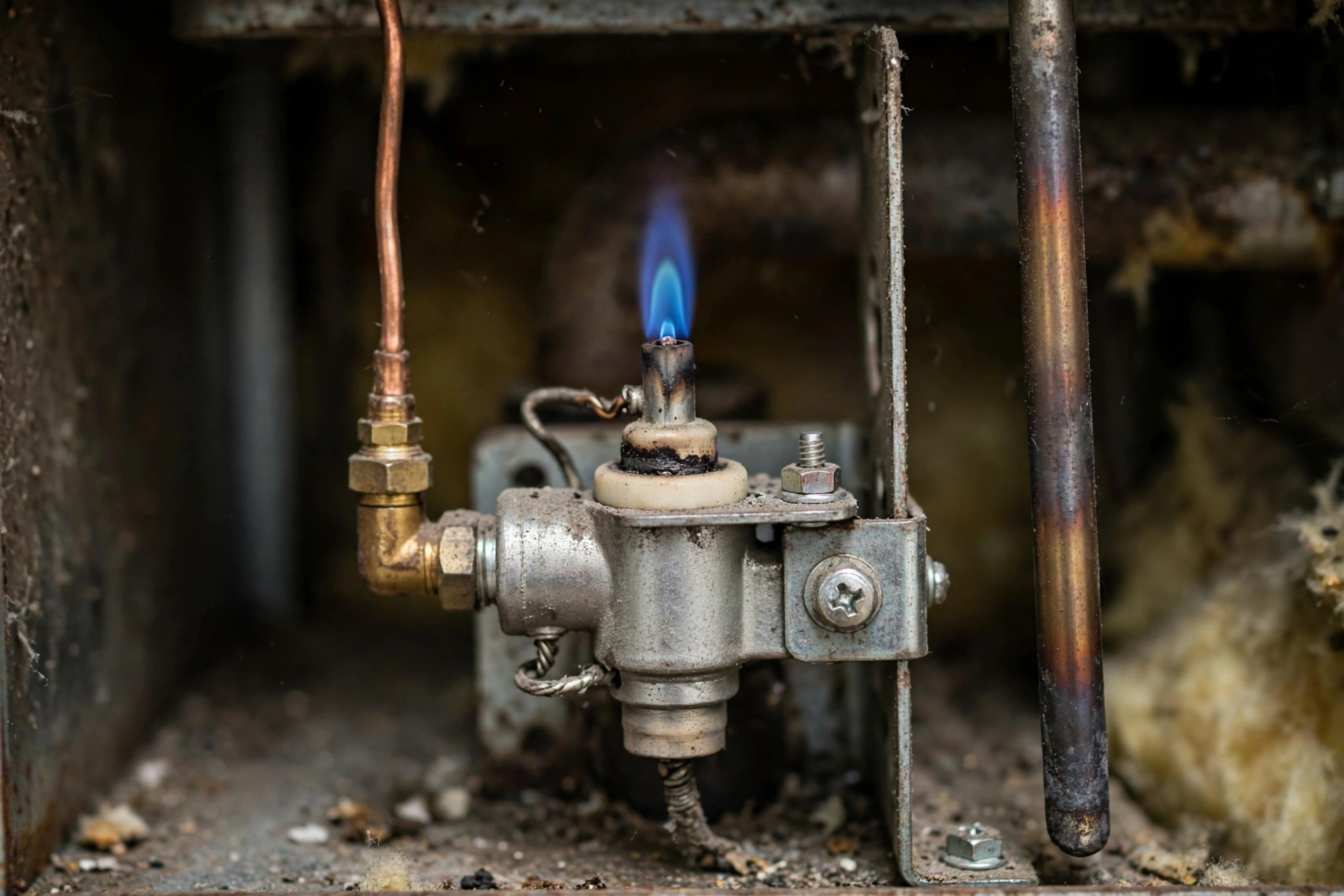
Brambleton arrived in 2000 with a town-center concept and walkable design. Its homes are newer, but builder-grade furnaces from the early 2000s are now old enough to develop the classic failure patterns: weak capacitors, clogged condensate lines, and thermostats struggling with multi-zone setups. Newer sections of Brambleton and Loudoun Valley feature the latest high-efficiency equipment, which brings its own maintenance needs around condensate management and variable-speed blower diagnostics.
The takeaway: tell us your neighborhood and approximate home age when you call. It helps the technician arrive with the right expectations and the right parts.
What Breaks Most in Ashburn Furnaces
Across hundreds of Ashburn service calls, the same failures top the list. Hot surface igniters lead by a wide margin: they glow white-hot every heating cycle and eventually crack from thermal fatigue. A furnace that tries to start, clicks, and gives up is usually telling you the igniter failed.
Flame sensors come next. They sit in the flame and develop an oxide coating that insulates them from the fire they are supposed to detect. The furnace lights, then shuts off seconds later because the sensor cannot prove flame. Cleaning sometimes buys time, but replacement is the lasting fix.
Capacitors round out the top three. These small cylinders store the electrical kick that starts blower motors. Heat and age dry them out, and a weak capacitor manifests as a humming motor that will not turn, or a blower that starts slowly and strains. In Ashburn's townhouses with tight utility closets running hotter than average, capacitors fail earlier than the textbook timeline suggests.
Getting Your Ashburn Furnace Ready for January
The best time to service an Ashburn furnace is September or October, before the first cold snap. A fall tune-up covers the full heating sequence: thermostat calibration, igniter inspection, flame sensor cleaning, blower motor amperage check, heat exchanger visual inspection, and condensate drain clearing for high-efficiency units.
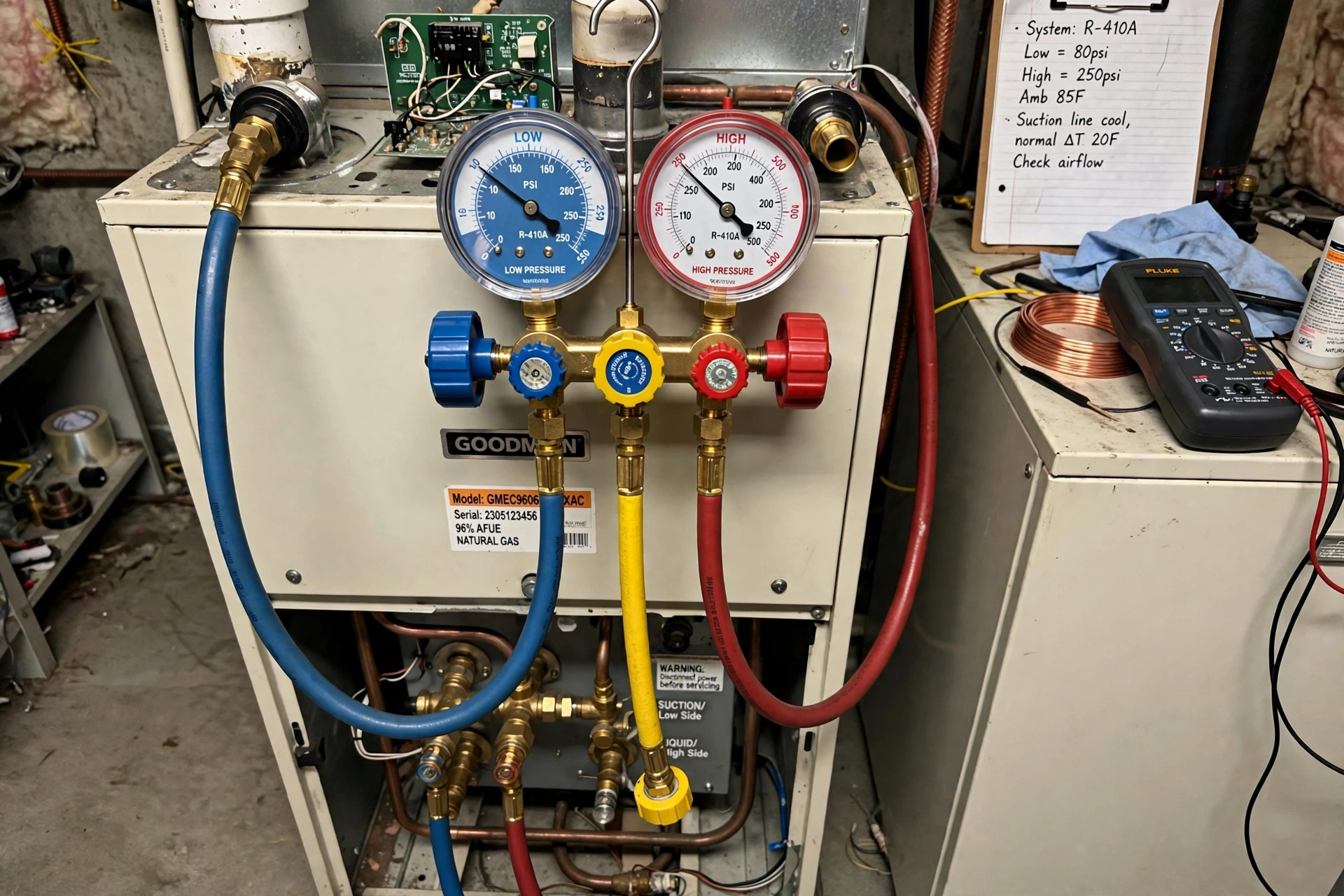
Between professional visits, homeowners can handle the basics: replace the air filter every one to three months during heating season, keep supply and return vents unblocked by furniture, and make sure the area around the furnace stays clear. If the furnace is in an attic or crawl space, check that the access remains unobstructed.
Watch for warning signs as winter approaches: the furnace running longer cycles than last year, new noises on startup, the house taking longer to reach the thermostat setting, or a spike in the heating bill without a corresponding cold snap. Any of these deserve a call to (571) 561-3454 before January arrives.
What Our Technicians See in Ashburn Homes
After hundreds of Ashburn service calls, patterns emerge. The most common discovery in Ashburn Village's older homes is a furnace that has been running on a clogged filter for months. The restricted airflow overheats the heat exchanger, trips the high-limit switch, and the homeowner calls about a furnace that runs for five minutes then quits. The filter, gray and bowed inward from suction, tells the whole story.
In Brambleton's newer homes, the pattern shifts to control issues. Multi-zone systems with dampers that have never been serviced, thermostats with dying batteries causing intermittent communication drops, and condensate drains clogged by the algae that thrives in Loudoun County's humid summers. None of these are expensive fixes, but each requires a technician who diagnoses rather than guesses.
Townhouse calls follow their own script. The utility closet is always tighter than expected, the furnace is always harder to access than the homeowner described, and the filter is always in the most awkward possible location. We have learned to ask detailed questions before dispatching to a townhouse: which floor is the furnace on, is there attic access, how old is the system. The answers determine which technician and which parts go on the truck.
The through-line across all Ashburn neighborhoods is that most failures are not mysteries. They are the predictable end of predictable neglect or predictable wear. A technician who has seen the pattern a hundred times reads the symptoms in minutes and fixes the actual problem rather than treating the symptom.
Getting to Your Ashburn Home: Our Service Area Detail
Our Ashburn service covers the full spread: Ashburn Village and its lake communities, Ashburn Farm's townhouse clusters, Broadlands around its preserved stream valleys, Brambleton's town center and surrounding streets, Loudoun Valley's newer sections, and the corridors along Loudoun County Parkway, Ashburn Road, and Route 7.
We also serve the areas that carry Ashburn addresses but sit on the edges: the developments toward Dulles, the neighborhoods near the Ashburn Metro station on the Silver Line, and the communities along the W&OD Trail corridor. If your mailing address says Ashburn, you are in our service area.
Response times vary by time of day and season, but Ashburn's central position in our Loudoun County routing means we are rarely more than a short drive away. During the January cold snaps when call volume spikes, we triage by severity: no-heat calls with vulnerable occupants jump to the front, followed by no-heat calls generally, then degraded-performance issues. Call (571) 561-3454 and describe your situation honestly; we will tell you exactly where you stand.