Professional furnace installation for Leesburg and Loudoun County homes.
A new furnace should be sized to your home with a proper load calculation, not just matched to the old unit. Our installation process covers sizing, duct evaluation, venting, gas or electric connections, permits, and full startup testing. Call (571) 561-3454 to discuss a new furnace for your Leesburg home.
The most common installation mistake is copying the old furnace size. Homes change: insulation gets added, windows get replaced, additions get built. A proper Manual J load calculation accounts for your home as it is today, and the right size is often smaller than what is being replaced.
An oversized furnace short cycles, wears parts faster, and leaves rooms uneven. An undersized one runs constantly on design days. The calculation takes the argument out of it.
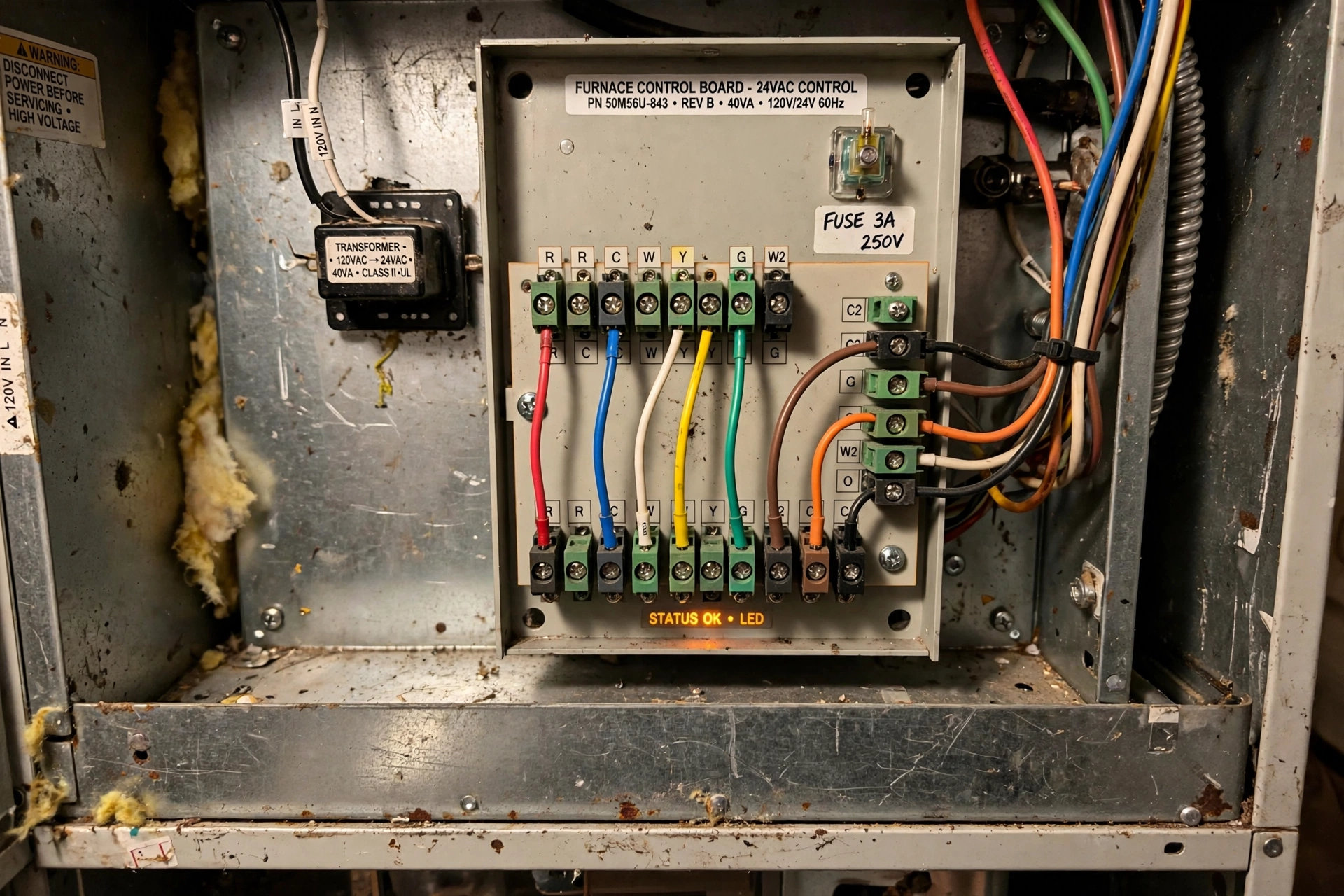
The old unit comes out, the new one goes in on a proper pad or platform, gas and electric are connected to code, venting is run with correct slope and clearances, the condensate drain is set, and the thermostat is wired and configured. Then the full startup: combustion testing, temperature rise verification, and airflow balancing.
Most single-system installations finish in one day. You get a walkthrough of the new equipment, filter locations, and thermostat operation before we leave.
A new furnace connected to failing ducts is a fast car on flat tires. Before installation day, the duct system gets evaluated for leaks, sizing, and condition. Sealing or modifying ducts alongside the new furnace is far cheaper than doing it later.
If rooms have always been uneven, say so during the estimate. Installation day is the moment to fix it.
Start with fuel: natural gas where the mains reach, propane for homes beyond them, electric where neither is available. Then comes sizing through a Manual J load calculation based on your home as it is today, not the old furnace label. Then staging: single-stage, two-stage, or modulating heat, paired with the right blower motor.
Match the furnace to the ductwork it will breathe through. A high-efficiency unit on undersized or leaky ducts short cycles and never delivers its rated comfort. Venting path, condensate drain routing for condensing models, gas line capacity, and thermostat compatibility all shape the final choice.
We walk through the options with the trade-offs stated plainly: what each choice costs to run, how it feels room to room, and what your home needs to support it. The right furnace is the one that fits the house, not the biggest one in the catalog.
Venting deserves an early decision, not a last-minute one. High-efficiency condensing furnaces vent through PVC out a side wall, while conventional units use the existing flue, and the route affects both cost and placement. Gas line capacity gets checked too, since a larger or modulating furnace may need more fuel flow than the old line delivered. Settling these during the estimate keeps installation day free of surprises.
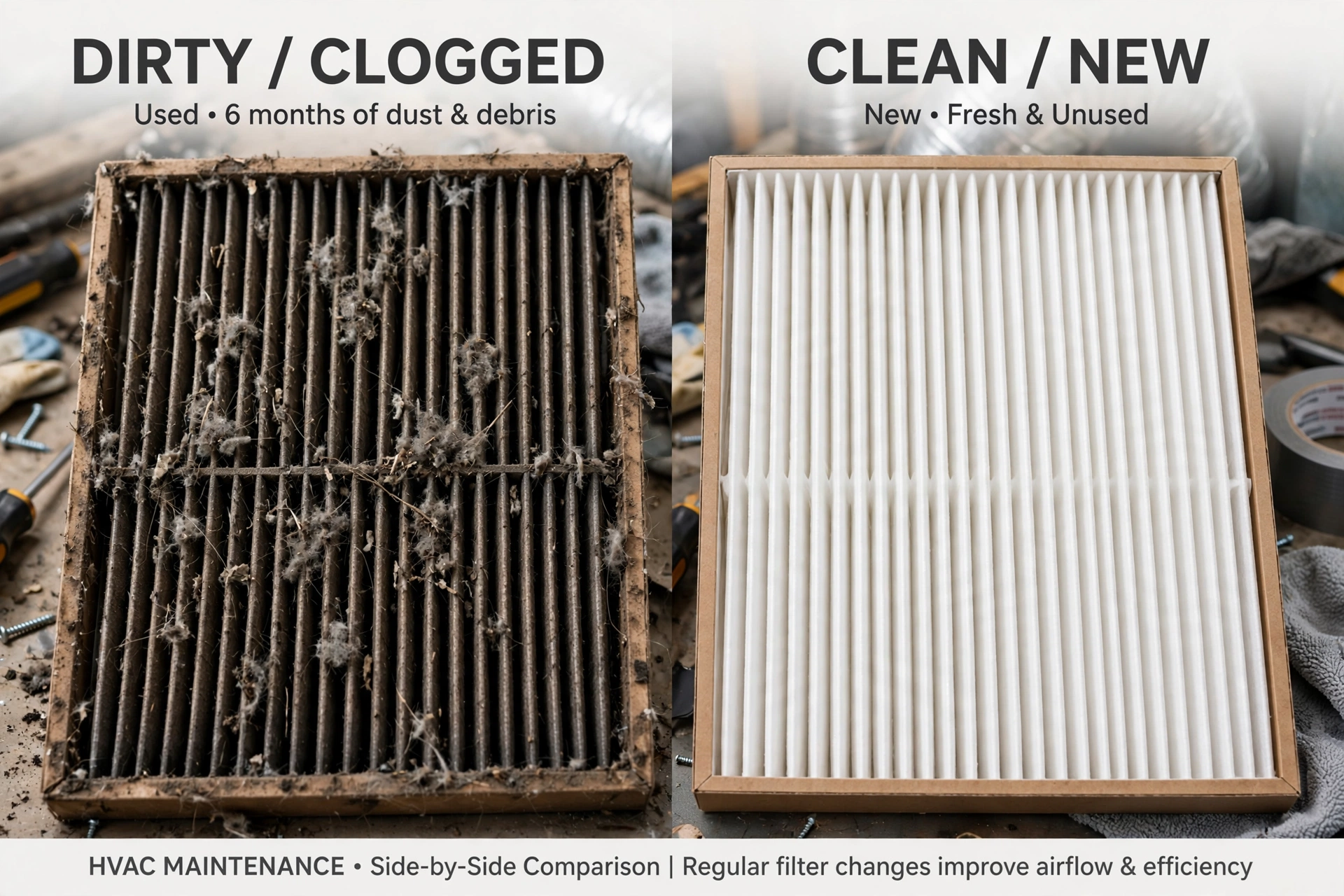
The first weeks sound different: the inducer motor humming at startup, a modulating blower ramping smoothly instead of blasting on and off, steadier temperatures as the system settles in. Check the air filter early, since installation stirs up dust that loads a fresh filter fast.
We verify temperature rise, static pressure, combustion numbers, and condensate drainage during startup testing. If anything feels off in the first heating season, uneven rooms, new noises, short cycling, call and we recheck the installation. Early adjustments are part of doing the job right.
Register the manufacturer warranty and keep the annual maintenance schedule. Both protect the investment and keep the warranty valid. Call (571) 561-3454 with any post-installation questions; we would rather answer them than have you wonder.
Expect the first filter check within a month. Installation stirs construction dust through the ductwork, and that dust loads a new filter quickly. After the first change, settle into the normal rhythm of checking monthly through heating season. A clean filter is the simplest way to protect the new heat exchanger and keep the temperature rise exactly where the startup test set it.
Straight answers before you call.
Describe what your furnace is doing and we will point you to the right next step.
Call (571) 561-3454A load calculation based on your home's square footage, insulation, windows, and orientation. Never accept a size based only on the old unit's label.
Most residential installations complete in one full day. Complex jobs with duct modifications can run two days.
Yes, furnace installations require permits and inspections in Loudoun County. We handle the permit process.
It depends on available utilities and your home's setup. Gas usually costs less to run where available; electric or heat pump systems suit homes without gas service.
We remove it and handle responsible disposal or recycling of the old equipment and materials.
No-heat emergencies diagnosed and repaired fast, day or night.
Diagnosis and repair for gas-fired furnaces and their controls.
Repair for electric furnaces, air handlers and heat strips.
Seasonal tune-ups that keep the furnace safe and reliable.
Call now and describe what is happening. We will take it from there.
Call (571) 561-3454